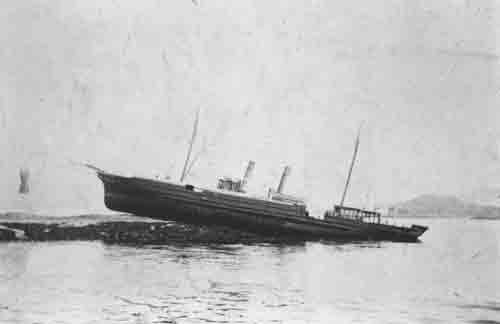
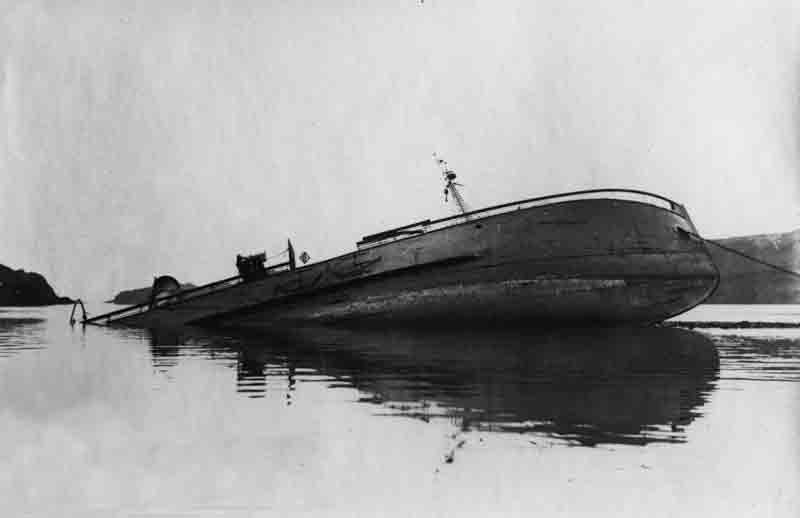
The steel steamship Shuna was built by A. Vuijk & Zonen, Capelle aan den Issel, Holland (Yard No 337) and launched on 29th April 1909. She measured 240.9′ x 35.2′ x 16.5′ and her tonnage was 1426 gross tons, 880 net tons. She was powered by a triple expansion steam engine by G T Gray, South Shields delivering 146 nominal horse power. She was owned by the Scandanavian Shipping Company and managed by Glen & Co. Ltd of St Vincent Street, Glasgow. Her official number was 128290.

Builders drawing – Lloyd’s Register Foundation
Unusually for the time of year, as the Shuna steamed north up the Scottish west coast on her outward voyage carrying coal from Glasgow to Gothenburg in Sweden on 8th May, 1913, she ran into a bad storm. Captain Elsper was relieved to reach the relative calm and safety of the Sound of Mull but even here the visibility was poor with driving rain and sea spray. As he passed Craignure just after 9pm that Thursday night the visibility deteriorated even further as daylight began to fade. Shortly after 10pm the ship ran onto Grey Rock and, although she did not stay aground, she quickly began to take in water. The captain decided to try to make for Tobermory but it was soon obvious that this would be impossible as the pumps were evidently failing to cope with the inrush of water. He decided to run his ship ashore on the Morven coast hoping to repair her and refloat her later.
As the storm continued to lash his ship, he steamed at full speed towards land, managing to beach her safely north west of Rubha Aird Seisg where he dropped both anchors to the seaward side to be used later to pull her off. The bow was high and dry on the shore but huge waves smashed the side of the ship and were breaking over the bridge. Later, as the weather subsided somewhat, the captain dispatched the mate for Tobermory to summon assistance and the crew settled down to wait for help. The Shuna was gradually settling into the water and by 5am it was obvious that she was going to go down. The crew were forced to abandon ship and reached the shore safely in the ship’s boats. They secured their ship to the shore with a sturdy hawser but this last futile effort to save her was to no avail. They could only watch helplessly as she settled further and finally, around 10am on Friday 9 May, the hatches blew off, the hawser snapped and she slipped beneath the surface. The 17 crew and Captain Elsper rowed safely back to Tobermory which they reached around midday, they were lodged in two hotels in Tobermory before making the trip back to Glasgow aboard the the MacBrayne’s steamer, the Chieftain.
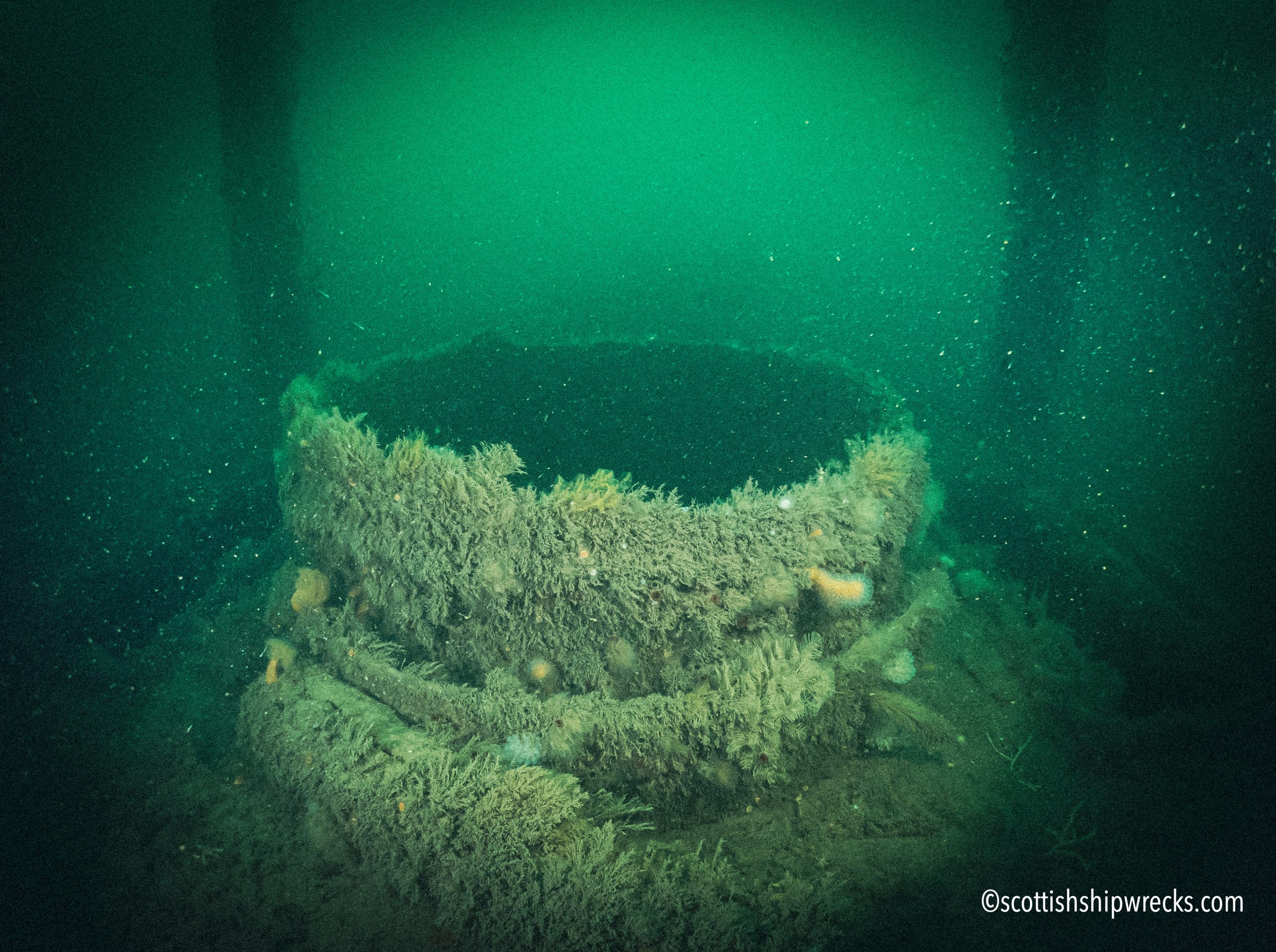
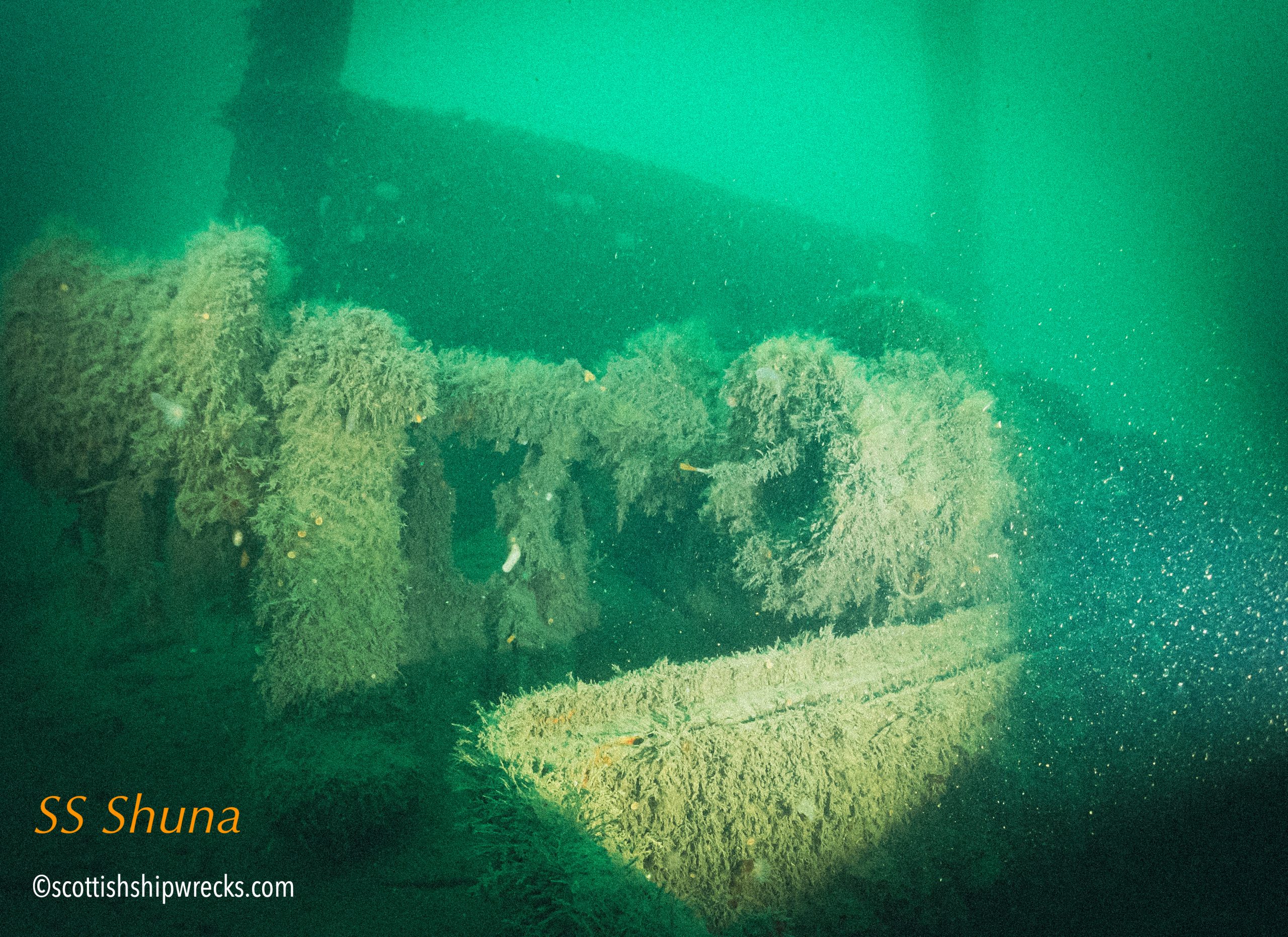
The Shuna was the last large wreck to be located in the Sound of Mull but by the time the location became known to sports divers she had been stripped clean of almost every single item of non ferrous metal. However the wreck is an excellent dive, in protected waters out of the main tidal flow in the Sound of Mull. She sits upright in 30 – 32 metres of water, parallel to the shore, on a gently sloping seabed with the deck 16 – 20 metres from surface.

The deck structures are almost completely collapsed although her four holds, engine room and raised forecastle still give a clear picture of her former layout. The holds are still full of coal but it is possible to descend into the engine room and some other areas below deck level. The wreck lies at 55°33.413’N, 005°54.842’W and is only 200 metres from the Morvern shore. It can be dived from the shore but it is a fairly long swim and probably not to be recommended.
Shuna Dive slideshow



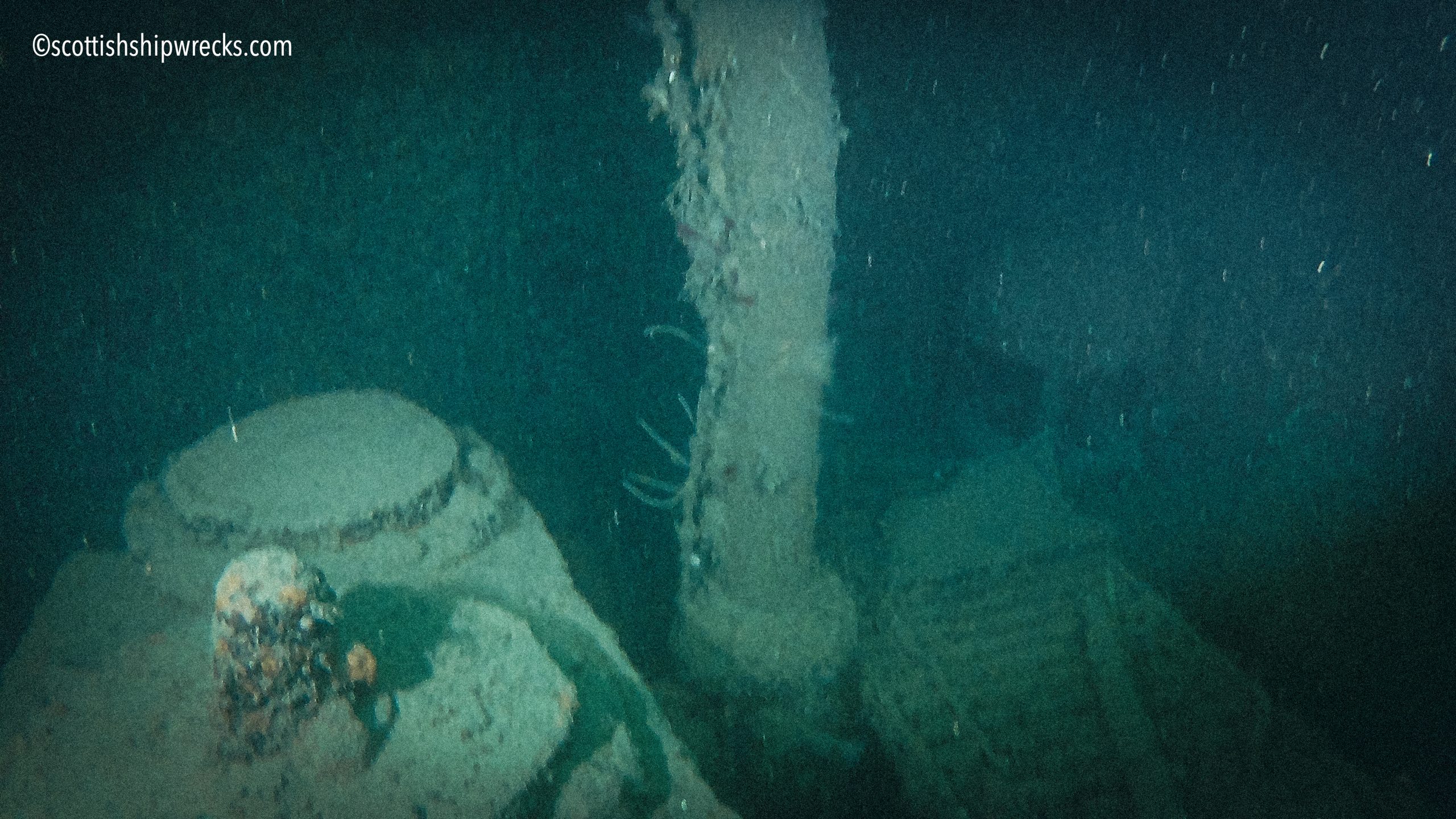

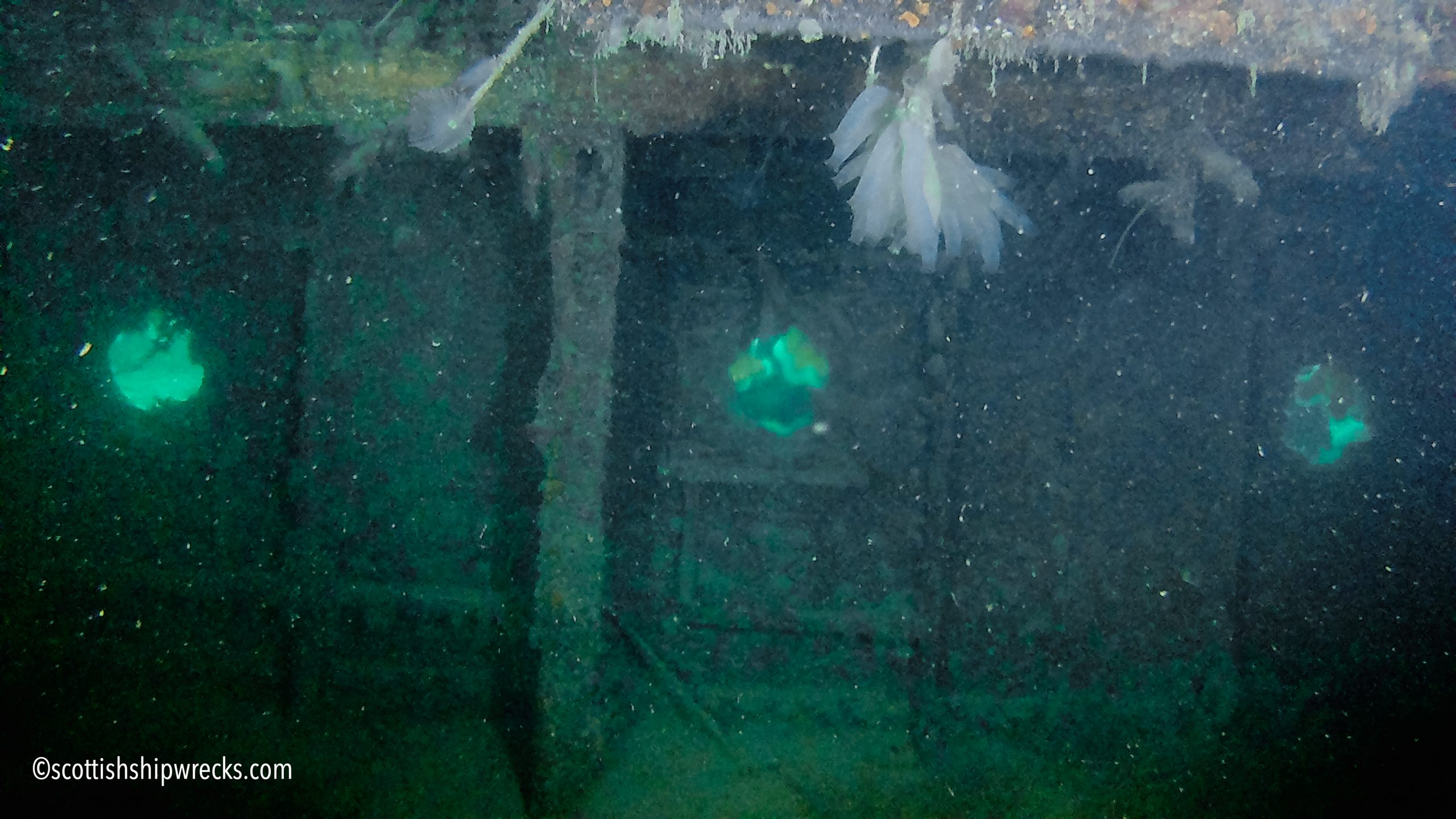

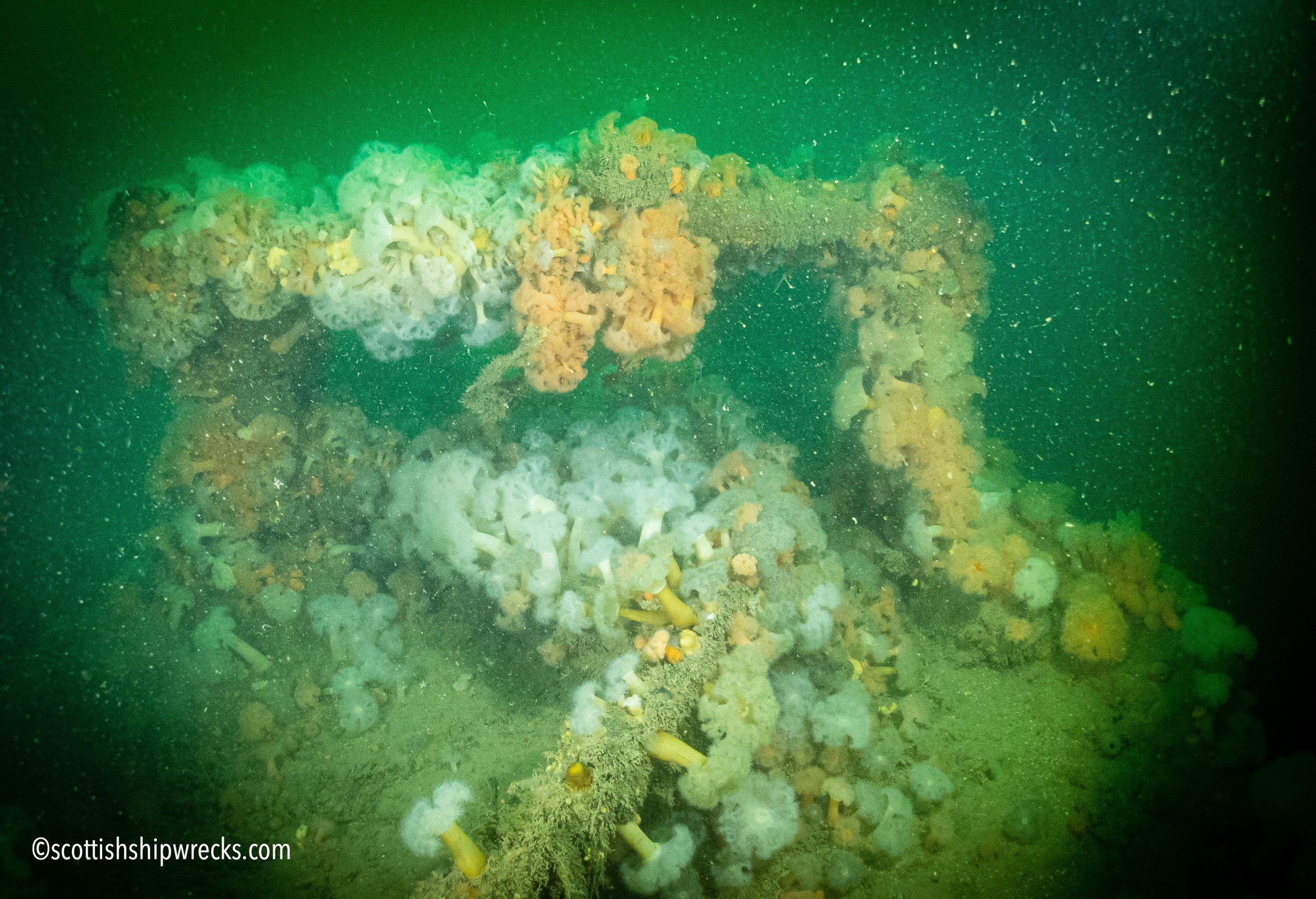
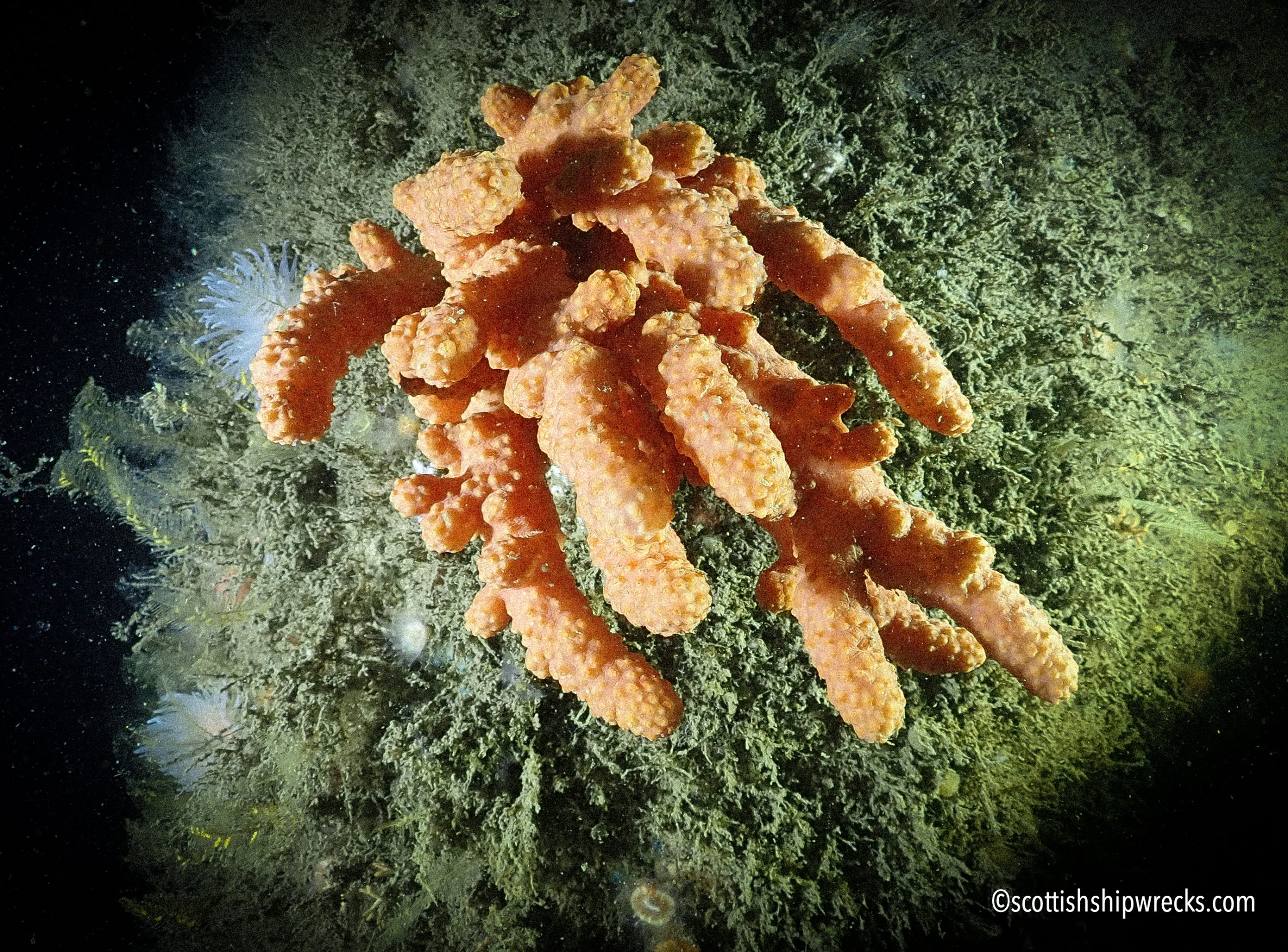
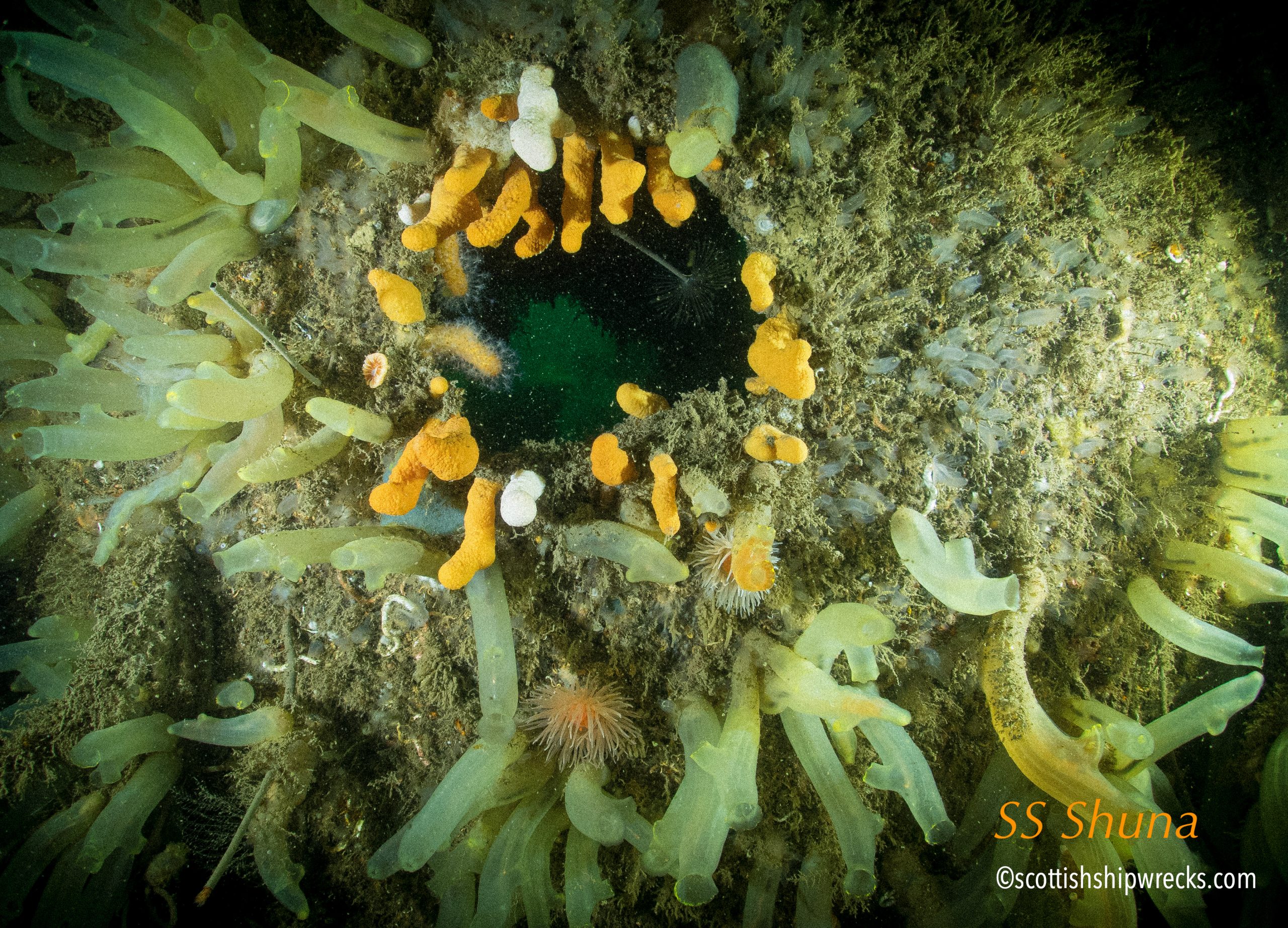
Unlike most of the other wrecks in the Sound of Mull, due to her relatively sheltered position in the bay, she is not subject to the strong tides of the area although some gentle current is possible. The wreck is a favourite for local dive charter boats and as such should be buoyed at most times of the year.