Launched from the yard of Hall Russell and Co Ltd on 26th February 1940 the steamship HMS Olive was built for the Admiralty and served throughout World War Two. She was sold to Sten Olsson and Helge Olofsson of Gothenburg in 1949 after her Admiralty service was complete. The vessel was lengthened and rebuilt by A/B Falkenberg and fitted there with a more powerful, second hand, 6 cylinder 2SA diesel engine, recovered from a Canadian vessel, by Fairbanks, Morse and Co, Beloit. She now measured 180.0′ x 27.5′ x 14.8′ and her tonnage was 573 gross tons, 327 net tons. She re-entered service with a new name: MV Samba.

Motor vessel Samba under way (Ned Scales).

Lloyds register 1956
In December of 1956 the Samba, now registered as the property of Rederi A/B Samba, departed from Rotterdam heading for Odda in Norway under the command of Captain Carl Blomberg with a crew of eight men aboard. As she headed out into the North Sea a gale swept across the British Isles turning the sea into huge waves and white capped surf. The waves were breaking over the Samba and finally penetrated her engine room causing the engines to fail. The Samba was drifting helplessly north driven by the gale force winds. A distress call was answered by the salvage tug Noord Holland which arrived on the scene hours later but the tug was unable to attach a line because of the difficult sea conditions. The Noord Holland followed the drifting tanker as she was swept further north and closer to the treacherous coast of Shetland. Eventually, as the sea calmed slightly, a line was secured between the two ships but almost immediately snapped. Two more times the line was attached but both times the line snapped and the Samba continued to be driven north towards Shetland. By this time the ship had been drifting for three days and the men aboard were exhausted and clearly in grave danger.

Maker’s plate from re-build in 1949
As the coastline approached a further distress call was picked up in Shetland and the Lerwick lifeboat set out into the maelstrom with the gale now gusting to over seventy miles an hour. Despite the terrible conditions six of the men aboard succeeded in launching a life raft and were picked up by the Noord Holland but three men remained aboard the Samba as she drifted helplessly towards the 500 foot high cliffs at the Ord of Bressay. A local fishing boat, the Harvest Hope, had also answered the distress call and managed to direct the Lerwick lifeboat, who were struggling to locate the drifting ship, to the correct location and, with the ship only yards from the base of the cliffs and pounded by huge swells, the lifeboat succeeded in taking off the last three crewmen who were huddled desperately near the stern of the ship. This effort by the lifeboat, which took six attempts to get close enough to the rolling ship for the men to jump aboard, was an amazing feat of seamanship by the lifeboat coxswain Ned Sales.

Belfast Newsletter 29th December
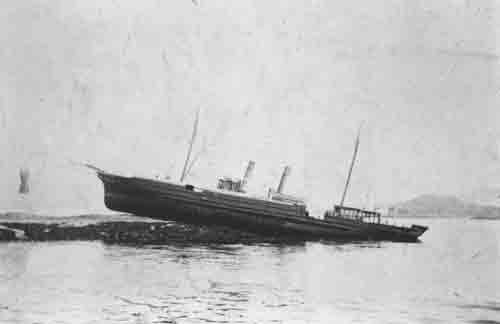
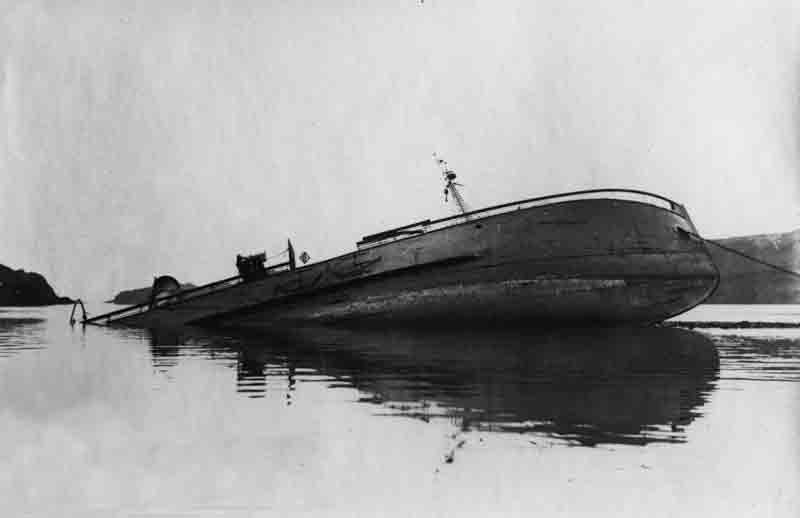
The abandoned ship was driven across Bressay Sound and finally came ashore at Ness of Sound on 28 December 1956. For months after the grounding the derelict hull of the Samba was visible above the surface but the continual pounding of the surf eventually broke up the ship and she disappeared beneath the waves.
The wreck of the Samba lies in position 60°07.678’N, 01°09.369’W and is well broken and spread across and wide area. The engine and propeller are visible among the rocks and gullies of the steeply sloping seabed with some larger pieces at the base of the slope including the forepeak and a large tank. At it’s deepest the wreck reaches 35 metres and rises up the slope to around 20 metres.
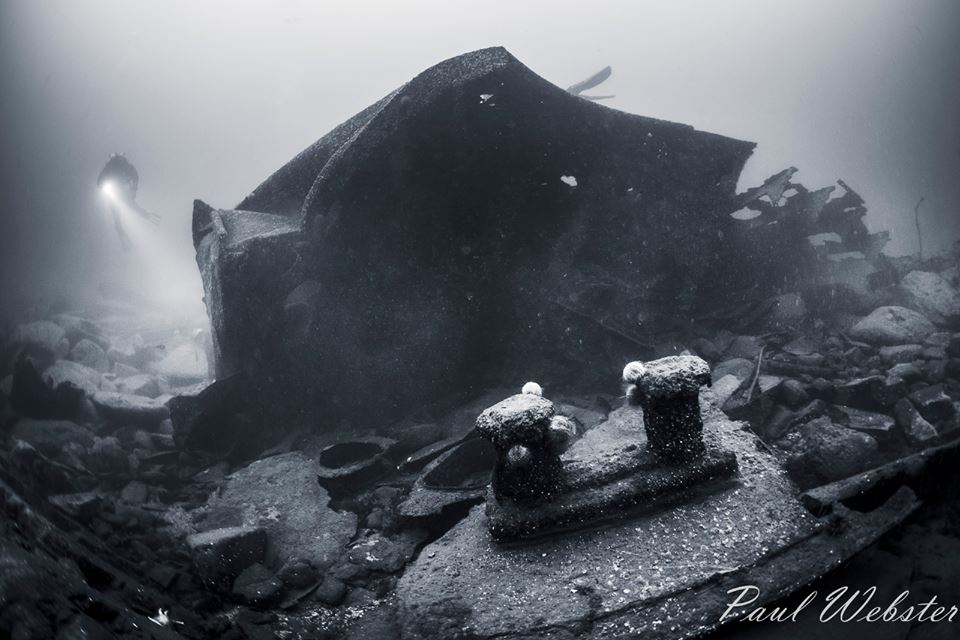
We would like to thank Paul Webster for allowing us to reproduce his underwater photograph of the wreck of the Samba.