The steel motor vessel Tapti was was launched on 8th June October 1945 from the Scotstoun yard of Charles Connell & Co., Glasgow (Yard No 448) for James Nourse Ltd., London. She measured 415.6′ x 55.2′ x 33.9′ and her tonnage was 6618 gross tons, 4352 net tons. She was powered by a 3 cylinder Doxford 2S CSA diesel engine by Barclay and Curle Ltd delivering 449 nominal horse power. Her official number was 180679.

MV Tapti dockside

Lloyds register 1951
The voyage from the Mersey to the Tyne around the north coast of Scotland and through the Pentland Firth was to be the precursor to a long uncomfortable winter trip to India. However, January is often the worst weather month on the Scottish west coast. As Captain Coney navigated the Tapti north towards the Minch on the 17th of that month in 1951, the ship was caught in a typical January gale with strong south west winds driving sheets of heavy rain across her decks. The sixty crew, mainly hardened seamen from China and India, were sent scuttling for shelter as the downpour reduced visibility to almost nil. The British officers on the evening watch strained to see ahead as the rain rattled against the windows of the bridge, but they could see nothing except inky blackness outside.
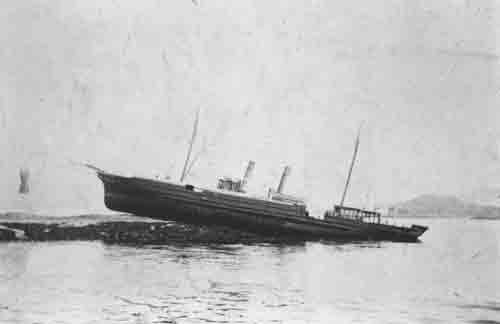
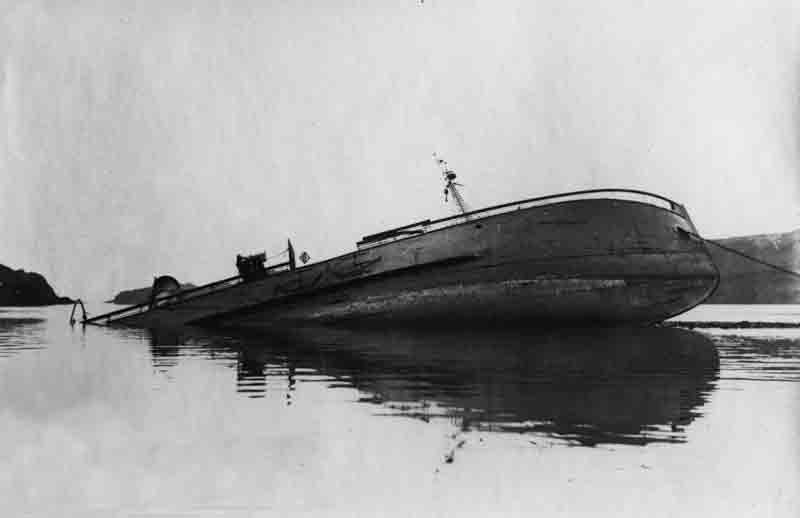
Without warning there was a tremendous crash as the ship ran aground and she shuddered to a sudden halt. The ship shook as the captain tried in vain to free her and she listed first one way then the other before the swell from the south swung her stern ashore and aground high on the rocks. She finally settled with a heavy list to starboard and the crew set about preparations to abandon her in case she started to go down.
Throughout the night they kept in continuous wireless contact with Malin Head Radio as a fleet of rescue vessels headed towards their position. By morning Mallaig and Barra lifeboats, two frigates and two trawlers were standing by but could do little as the ship settled deeper in the water. Eventually, as the list reached a precarious sixty degrees, the captain ordered the crew to leave the ship and they scrambled down the nets which had been thrown over the side and into the waiting lifeboats. No one was hurt and the crew were taken safely to Tobermory leaving their ship behind on the rocky islet of Eilean Soa. Four days later during Saturday night the Tapti, pounded by yet another severe gale, slipped off the rocks and sank in deep water.


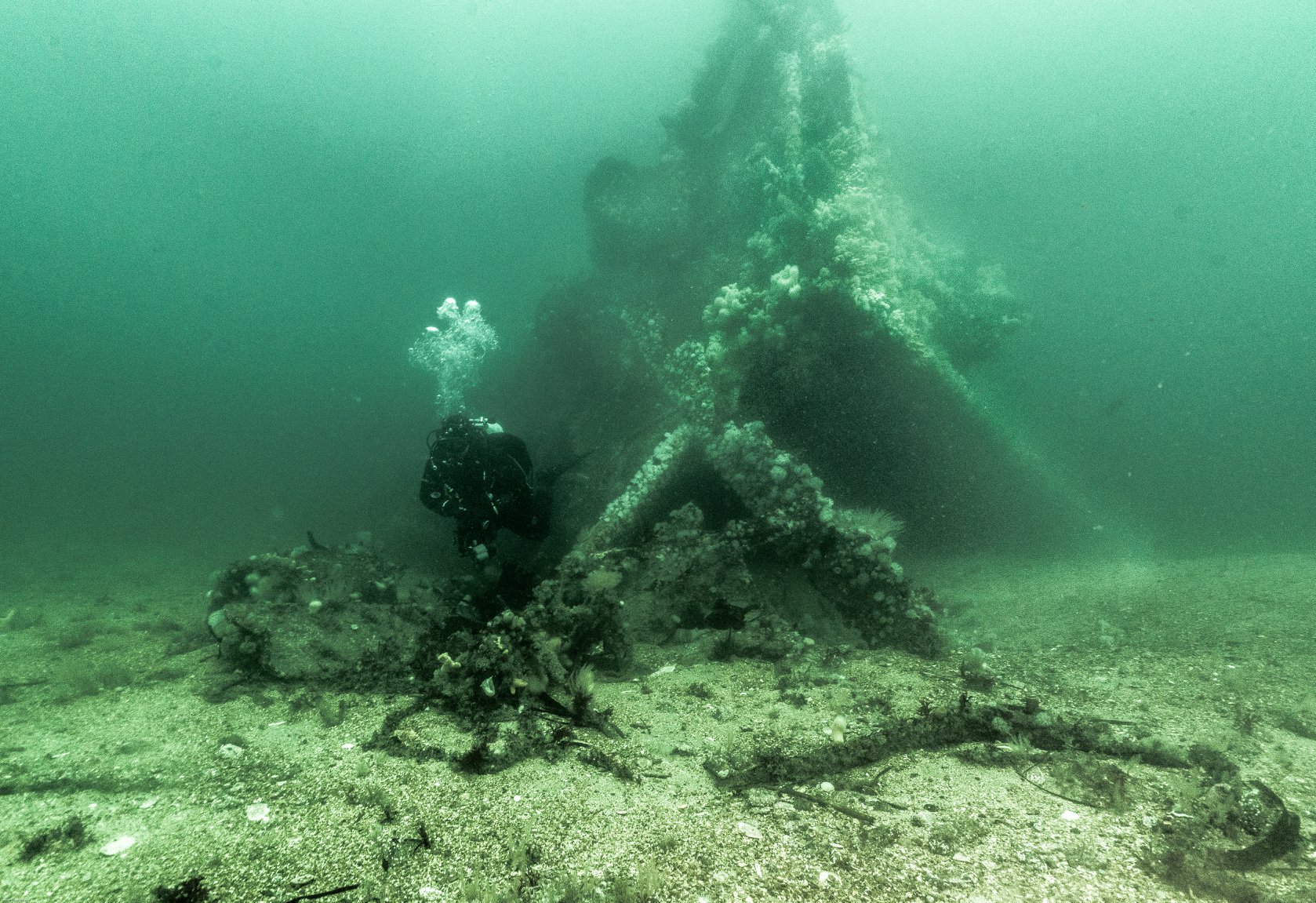
The Tapti was a large ship and, despite the obvious attentions of salvage teams over the years, remains an impressive wreck. She lies south of Eilean Iomallach in position 56°33.664’N, 006°37.845’W (GPS) in depths from 10 to 25 metres. Her stern is nearest the shore and is the shallowest part of the site with the bow bearing south east.

Large pieces of wreckage are strewn across a rock and sandy seabed with many still recognisable features along the entire length of the ship. Her bow is the most impressive aspect of the wreck. The bow section is separated from the rest of the wreckage and points to the surface rising nearly 15 metres from the seabed. The impressive wreckage and the masses of colourful encrusting sealife make this a memorable dive site. There is very little current in the area but the site is exposed from the south and can therefore be subject to heavy swell if the wind is from that direction.