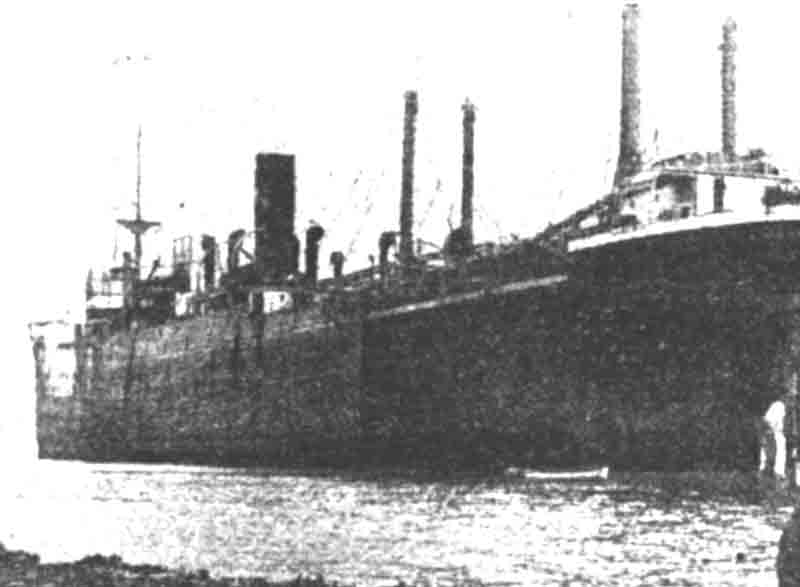
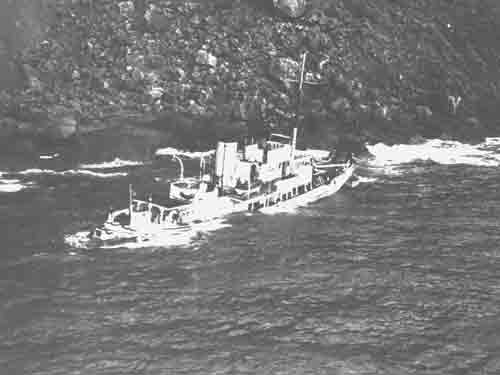
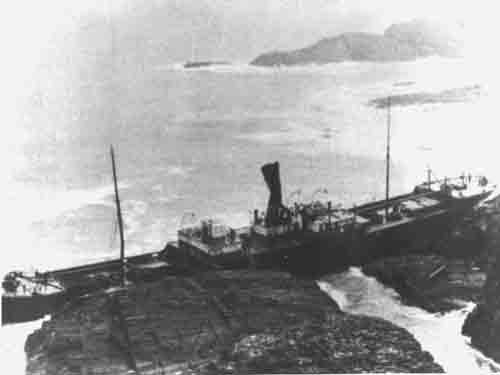
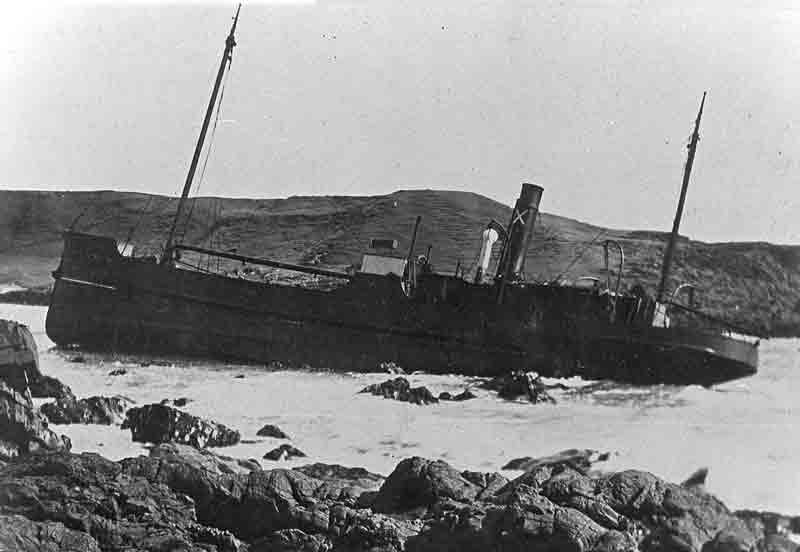
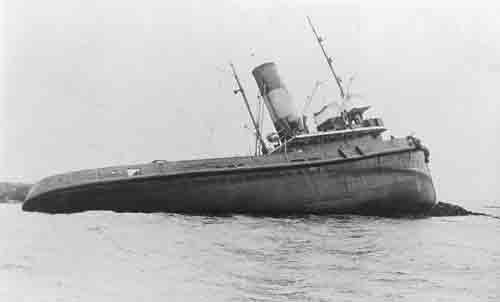
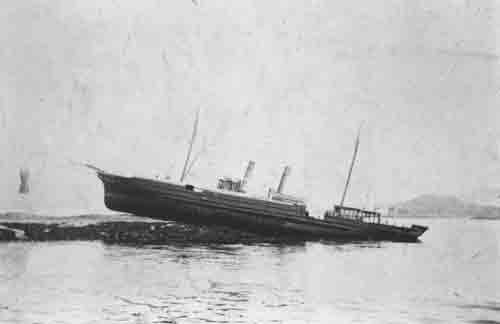
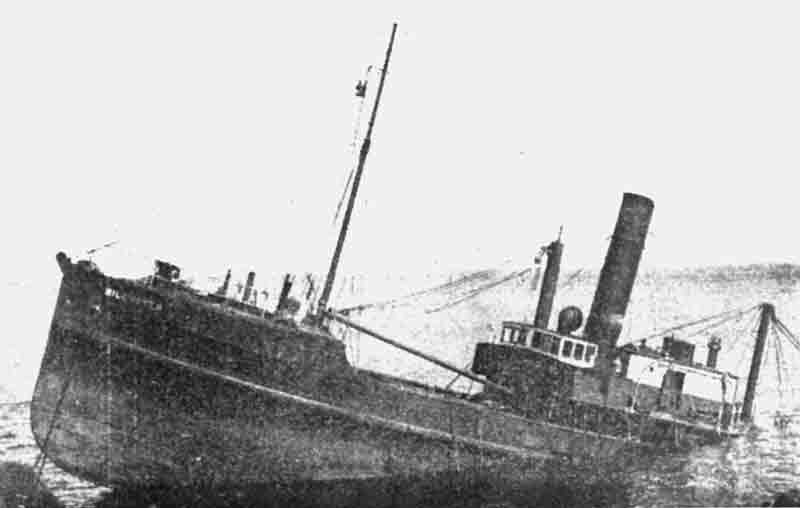
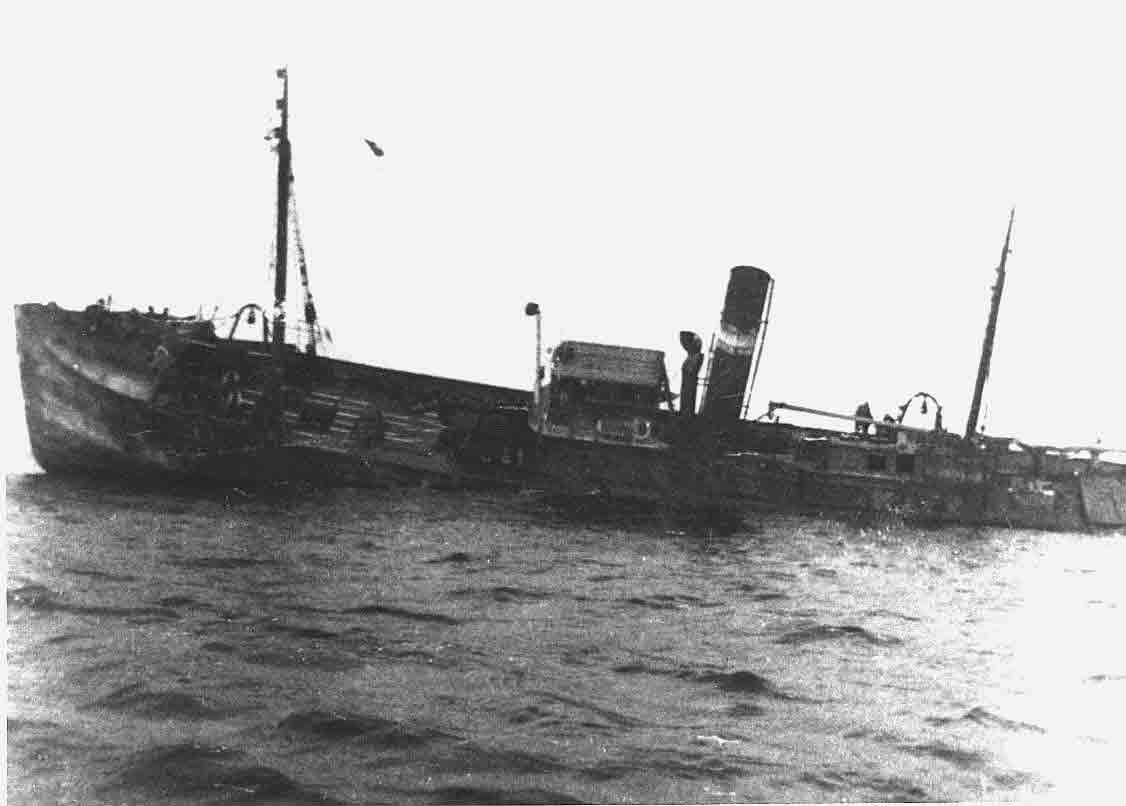
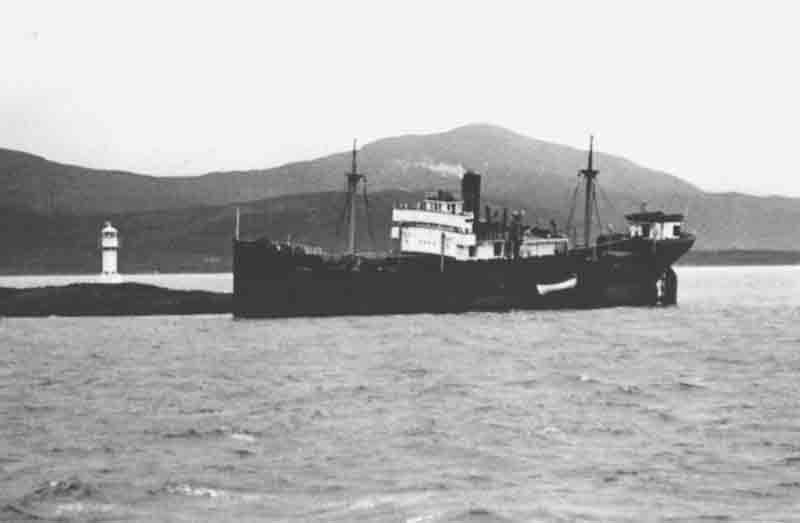
The iron cargo ship Wylo was launched from the West Yard of John Readhead and Co Ltd., South Shields (Yard No 197) on 18th August 1893. She measured 250.0′ x 36.2′ x 17.6′ and her tonnage was 1396 gross tons, 836 net tons. She was powered by a 2 cylinder compound steam engine by Readhead delivering 135 nominal horse power. On 3rd October she was registered in Liverpool by her new owners Steam Ship Wylo Ltd (Gracie, Beazley and Co Ltd) and entered service. In 1896 she was sold to Greek owners, G L Vatis and Co, Syros who renamed her Billio. Three years later she was sold to Swedish owners in Helsinborg and began a career operating for multiple Swedish owners spanning forty years. Through most of this period she was named Excelsior before she was acquired by her final owners, A Saarna and G H Dalgren of Tallin, who named her Anu.
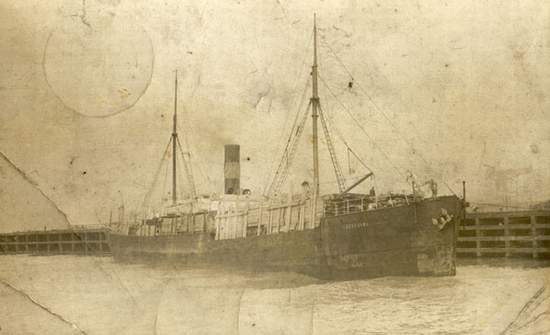
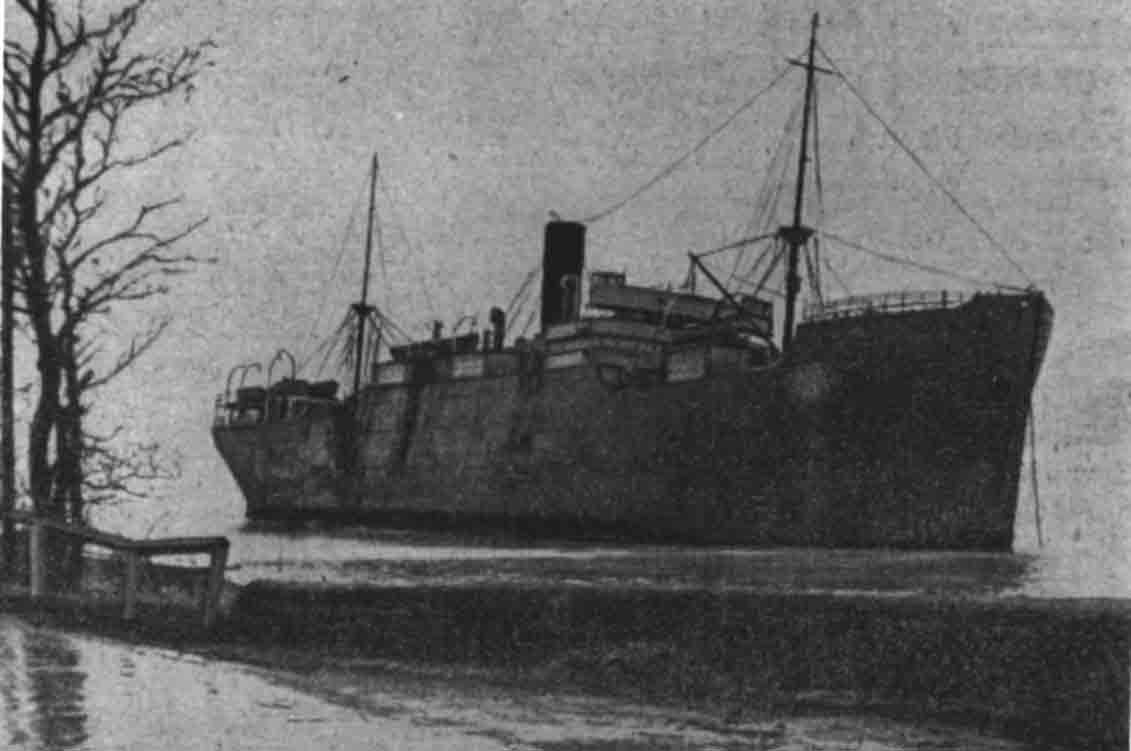
Anu as Excelsior

Lloyd’s register 1939
On 6th February 1940 she was en route from Gothenburg to Dundee via Aberdeen with a general cargo under the command of Captain Johannes Raudsoo. As they approached the entrance to the Tay estuary they were unaware of the danger that lay ahead. The area off the Tay was to be a favourite hunting ground for German minelaying U-boats and as such was normally well swept to keep the important seaway clear. However, at least one of the nine mines laid by U-13 on 12th December 1939 had remained undetected. U-13, under the command of Kapitanleutnant Heinz Scheringer, had departed from her base in Kiel on 9th December and crossed the North Sea to lay her deadly cargo across the mouth of the Tay east of the Tay Fairway Buoy. On the morning of 6th January 1940 the steamship City of Marseilles was damaged by one of her mines. The ship had just taken a pilot aboard when the mine exploded under her bridge, stopping the engines and causing a list of 10 to 15° to starboard. The crew began to abandon ship, but two lifeboats had been destroyed by the explosion and another capsized during launch, throwing the 14 occupants into the water. One crew member was lost. The survivors were picked up by the pilot cutter from Tayport and the Broughty Ferry lifeboat Mona and landed at Broughty. The abandoned City of Marseilles was later boarded and, the next day, and she was towed to Dundee where temporary repairs were made. The ship then continued to the Clyde for repairs and returned to service in April 1940.
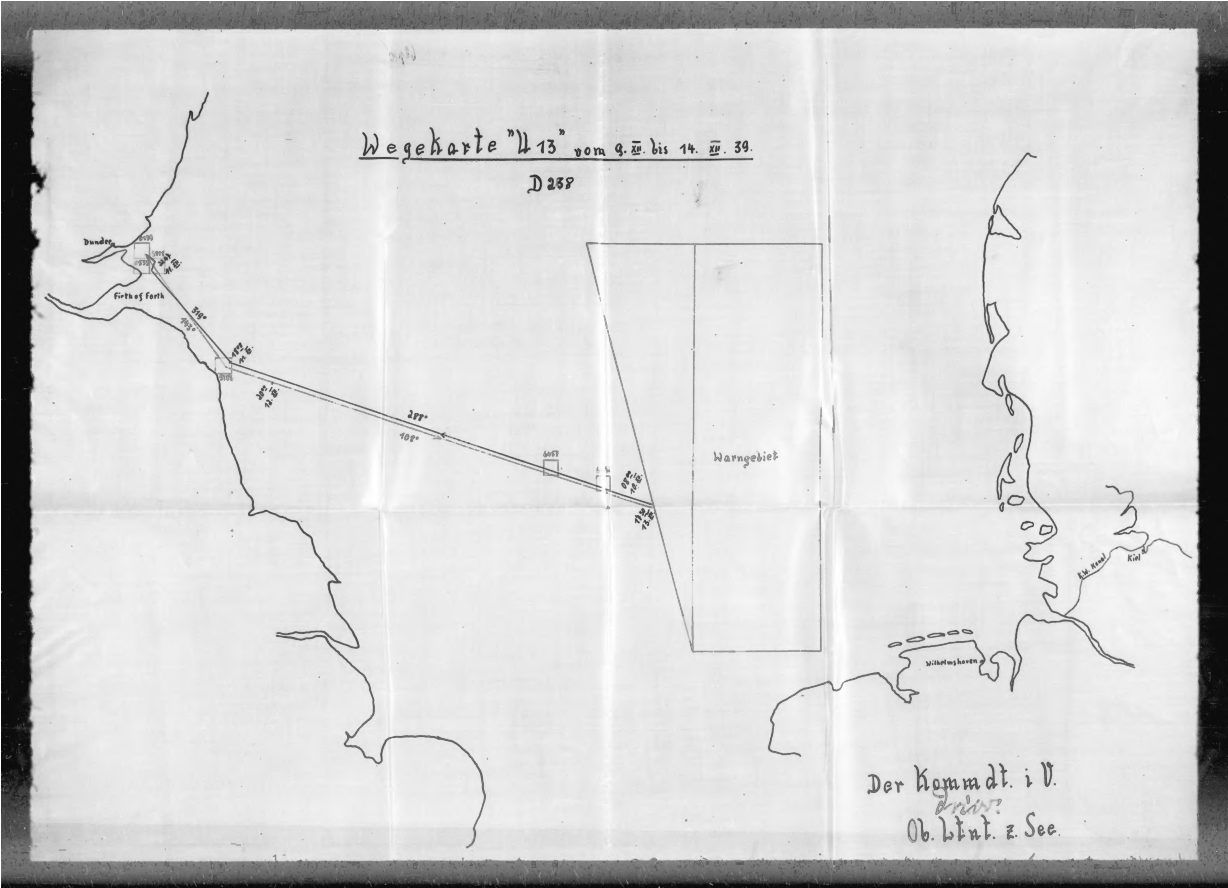
U-12 KTB sortie map
Anu was not to be so lucky. Presumably the area off the Fairway Buoy was swept after the City of Marseilles incident but it appears that at least one of the deadly mines was missed by the minesweepers. As Anu approached the Tay on 6th February she was rocked by a huge explosion and sank with the loss of seven of her crewmen.
The wreck believed to be Anu lies in position 56° 26.952’N, 02° 36.028’W. The wreck in this position, lying in 20 metres, is reported to be 38 metres long oriented 160/340 degrees which makes it small for the wreck of Anu. In 1989 it was reported by divers to be the wreck of a trawler. However, the wreck in this position can be tracked back through various Hydrographic Department reports to the original report of the sinking of Anu in 1940 was recorded in a 1969 survey to be over 200′ long. There are a number of wrecks in this vicinity so it is possible the diver report in 1989 is erroneous. However, the latest survey in 2003 reported an upright in tact wreck which would support the 1989 theory that it is in fact a trawler. A bit of a mystery on this one!