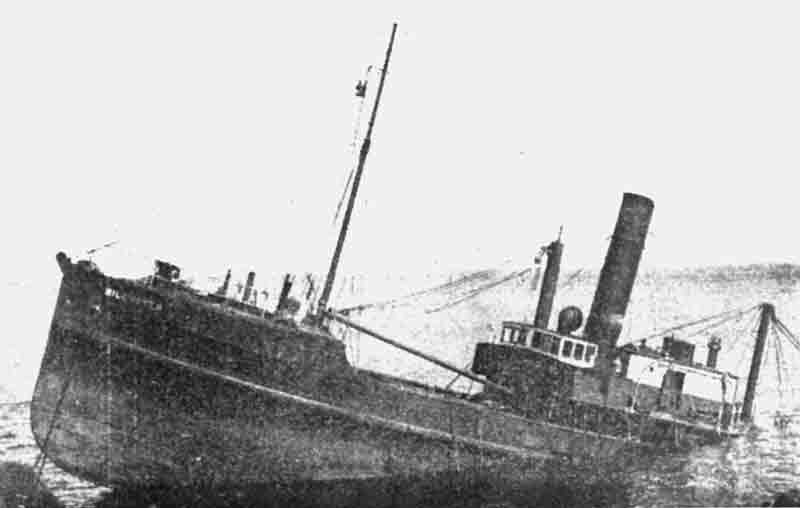
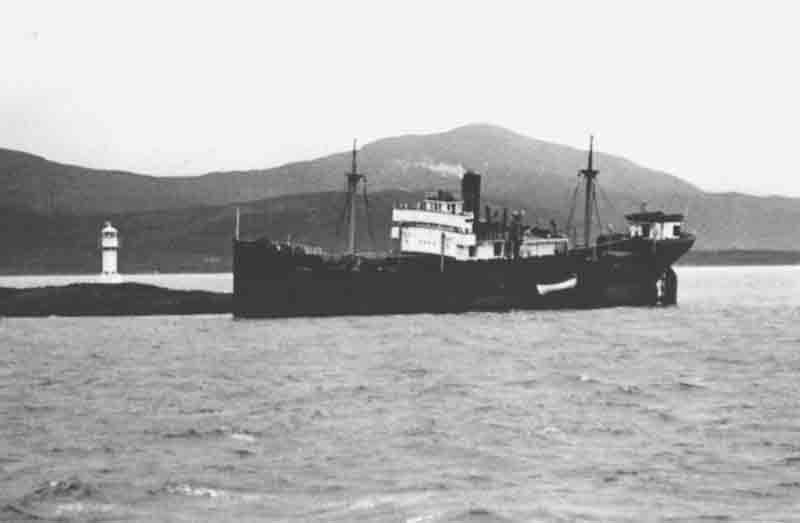
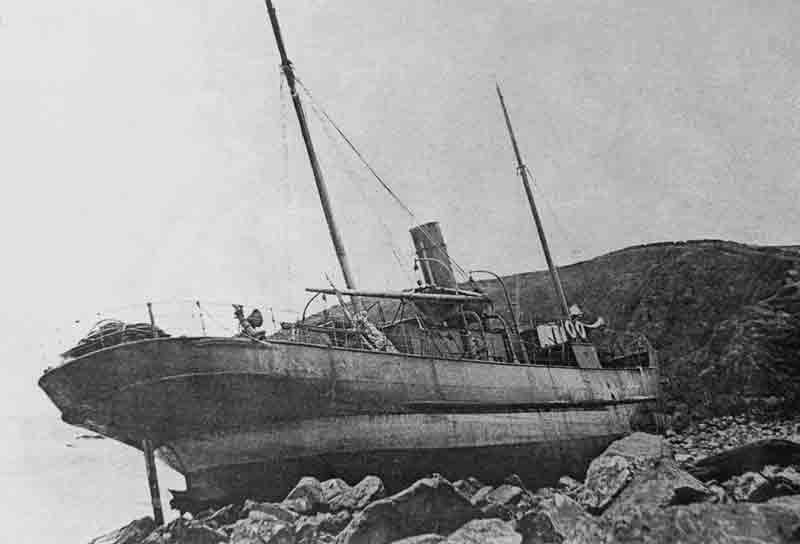
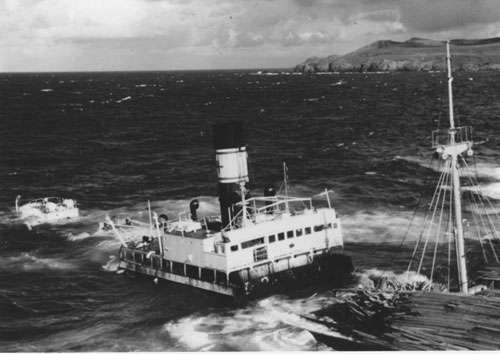
The steel steamship Ben Veg was launched from the yard of Larne Shipbuilding Co Ltd., Larne (Yard No 65) in 1914. She measured 95.0′ x 19.1′ x 8.5′ and her tonnage was 159 gross tons, 61 net tons. She was powered by a 2 cylinder compound steam engine by Gauldie, Gillespie and Co Ltd., Glasgow delivering 50 registered horse power. She was ordered by the Ramsey Steamship Co. Ltd., IOM and registered in Ramsey on 19th August 1914.
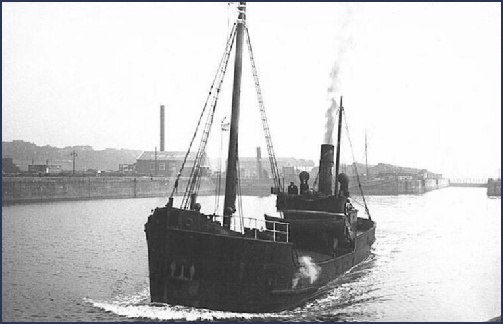
Ben Veg under way

Lloyd’s register 1939
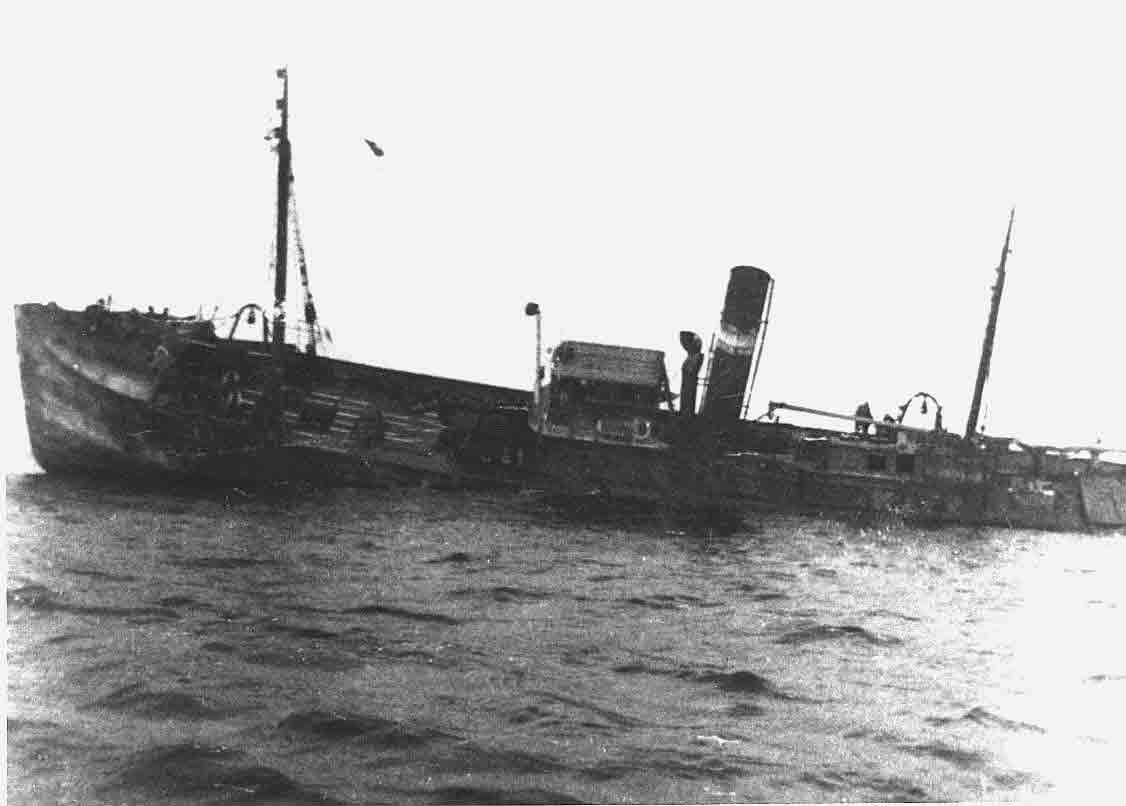
She survived World War One despite the attentions of German U-boats in the Irish Sea and returned to normal peace time operations in the inter war years. The outbreak of World War Two brought a return of the U-boat danger but she was not to be lost to enemy action. In the early hours of the morning on the 22nd May 1941 she was bound for Whitehaven from Cairnlough in Northern Ireland. In pitch darkness she was run down by the MV Brittany, a Royal Mail Lines ship bound for the River Plate in an outward-bound war time convoy. The 4,772 ton Brittany struck the starboard side of the Ben Veg fatally damaging the small steamer smashing a huge tear in her side towards the stern. Thankfully, the crew were uninjured and initially even seemed to managed to get the ingress of water under control and preventing her immediate foundering. The crew decided to divert to the Isle of Man hopeful of beaching her at Peel for repair. However at 6am, just four hours after the collision, the rising water in the engine room overcame the pumps and the crew were forced to abandon her. The six crewmen safely launched and boarded their lifeboat staying close by the foundering steamship until she finally went under eight miles from the Point of Ayre on the Isle of Man.

MV Brittany
The wreck of the Ben Veg lies in position 54° 32.391’N, 004° 25.773’W . She sits upright on a stony seabed oriented 70/250 degrees in a depth of 41 metres with a least depth clearance of 33 metres. The hull is intact an would appear to have been wire sept at some time as the deck superstructure is completely missing. The visibility in the area is normally good due to the strong tides that sweep the area. These tides also bring lots of nutrients to the mass of anemonae and dead men’s fingers that cover every square inch of the structure. The damage caused by the collision is clearly visible on the starboard side forward of the stern.
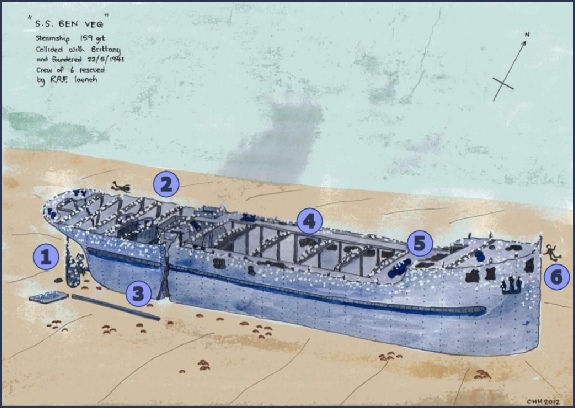
We’d like to thank Newton Stewart Sub Aqua Club for their permission to use the drawing of the wreck underwater in this article. Further details can be found on their website at www.nsdivers.co.uk