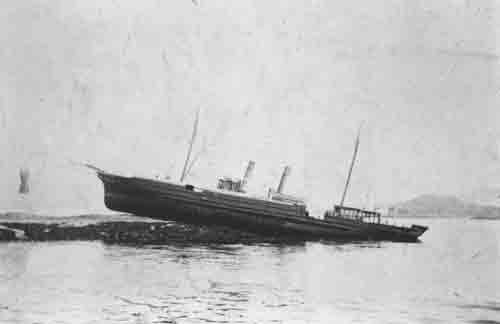
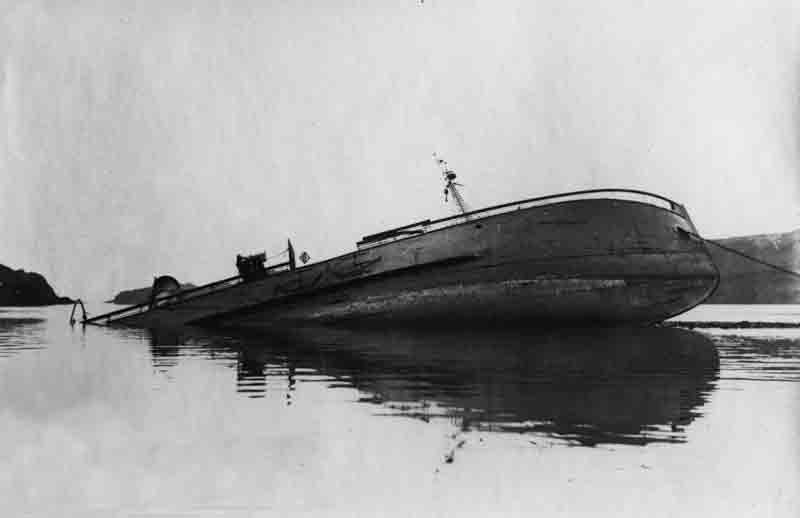
The steel motor tanker Danmark was launched from the Copenhagen yard of Burmeister and Wain’s Maskin and Skibsbyggeri (Yard No 590) on 15th August 1931. She measured 490.8′ x 67.8′ x 35.8′ and her tonnage was 10517 gross tons, 6458 net tons. She was powered by 12 cylinder 4SCSA diesel engines by Burmeister and Wain delivering 709 nominal horse power. Ordered by Det Danske Petroleum A/S she was registered in Copenhagen and was delivered to her owners in October 1931.
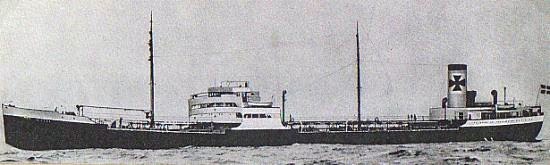
MV Danmark under way

Lloyd’s register 1939
With the outbreak of Word War Two her global voyages transporting fuel for the allies became increasingly dangerous. In January 1940 she was en route from Aruba to Nyborg with a cargo of 8200 tons of refined petrol and 5760 tons of kerosene. On board she had a crew of forty men. She reached Orkney and anchored in Inganess Bay for a break in her voyage before making the final dangerous leg across the North Sea to her destination. Meanwhile the German U-boat U-23 was en route across the North Sea from her home port of Kiel. In command was Kapitantleutnant Otto Kretschmer who was destined to become one of the most successful German U-boat commanders sinking 45 ships with a total tonnage of over 250,000 tons and surviving the war. On this sortie he had attacked and sunk the Norwegian steamship Fredville in the outer Moray Firth on 11th January before heading north west towards Orkney.
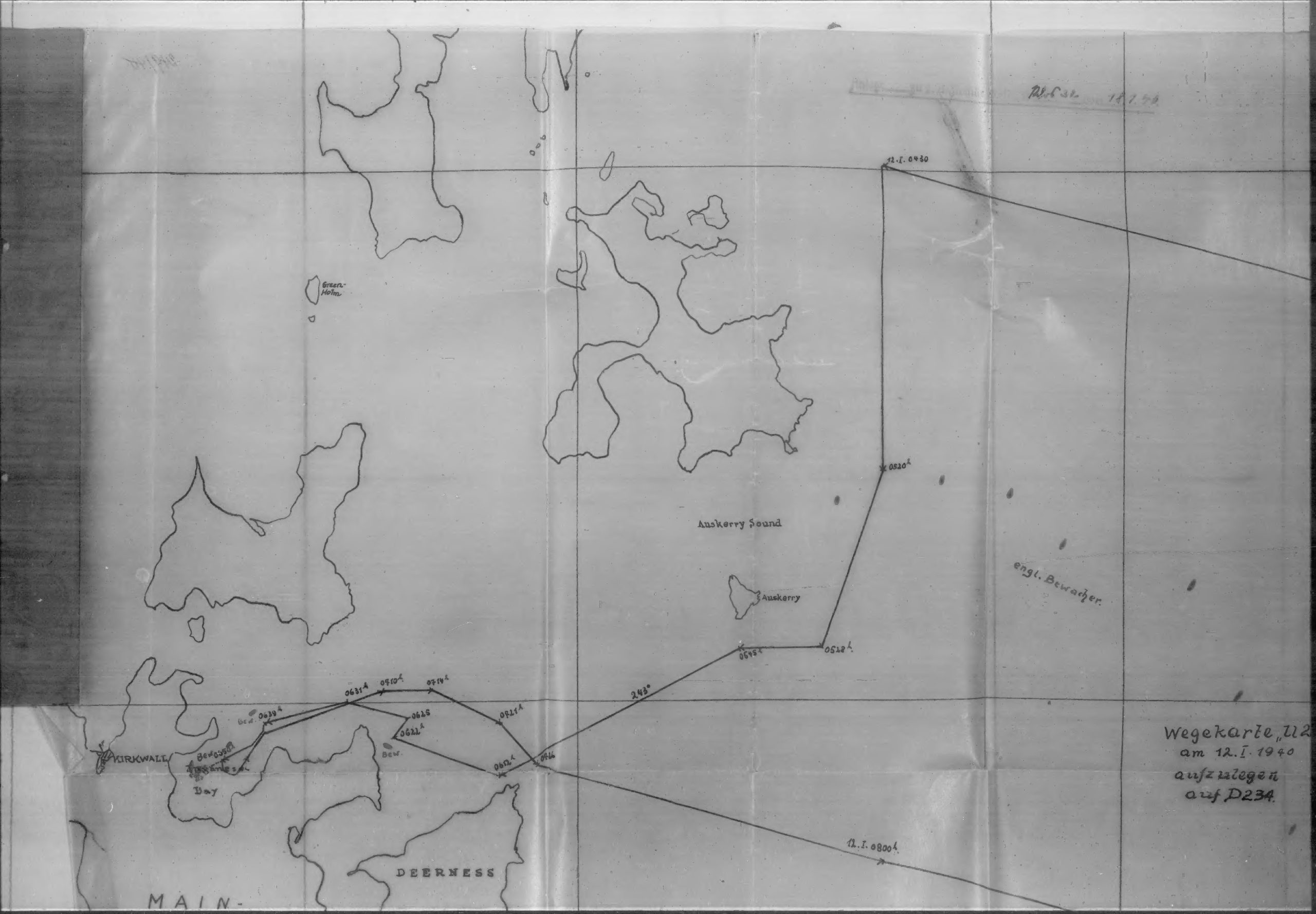
U-23 KTB track of attack
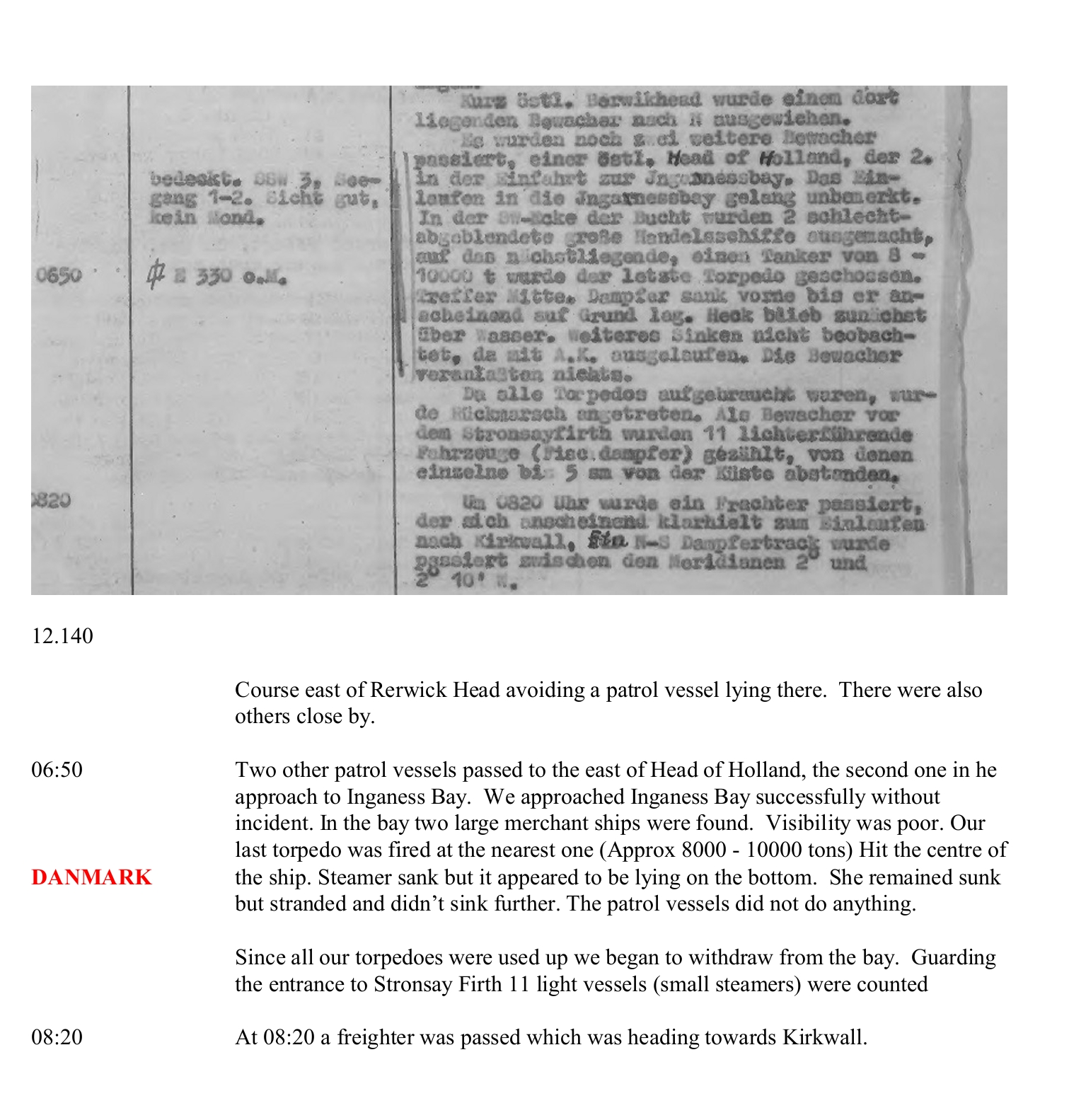
U-23 KTB attack detail
On 12th January the U-boat approached Shapinsay from the east before turning south and crossing Auskerry Sound. At 6:30am they were off the entrance to Inganess Bay when Kretschmer spotted Danmark and another large vessel at anchor in the middle of the bay. Kretschmer had only a single torpedo remaining of his full compliment of five torpedoes. In poor visibility he fired from a safe distance of 900 metres a secured a direct hit midships on Danmark. She sank immediately but Kretschmer later reported she sank in shallow water and only partially submerged before she sat upright in the middle of the bay. Later British reports suggested that in fact she was only damaged in the attack and gradually sank over the following 10 days ultimately resting on the seabed with superstructure partially visible above the surface.
It is not recorded if the crew were aboard Danmark when she was hit. As there were no casualties it is possible that the crew were ashore when she was attacked. The half sunken wreck of Danmark lay in the middle of Inganess Bay before salvage workers successfully raised the forepart of the vessel in 1941 and towed her to Inverkeithing to be used as a storage hulk.
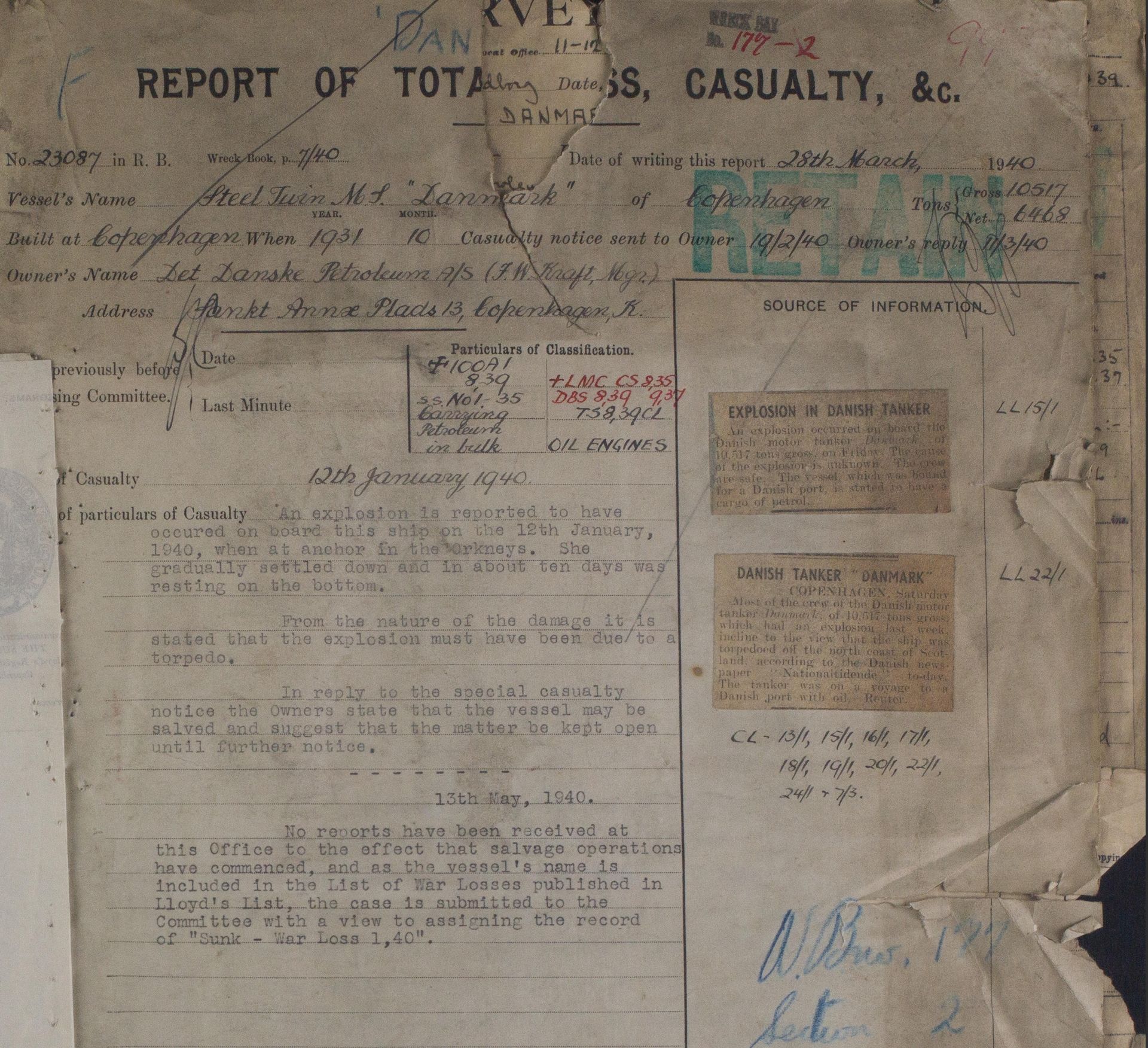
Lloyd’s casualty report
In 1951 the remaining wreckage of the stern section 0f the ship was reported to protrude above the surface 3 metres at low water before the wreckage was totally dispersed with explosives in 1961. Presumably some scattered remains still exist at the site but we have no information regarding what may or may not remain. Hydrographic Department reports the wreckage in position 58° 58 780’N, 02° 53 18’W. A survey in 2010 reported only a scour pit at the position although the chart retains a foul mark so it is possible some scattered wreckage remains.
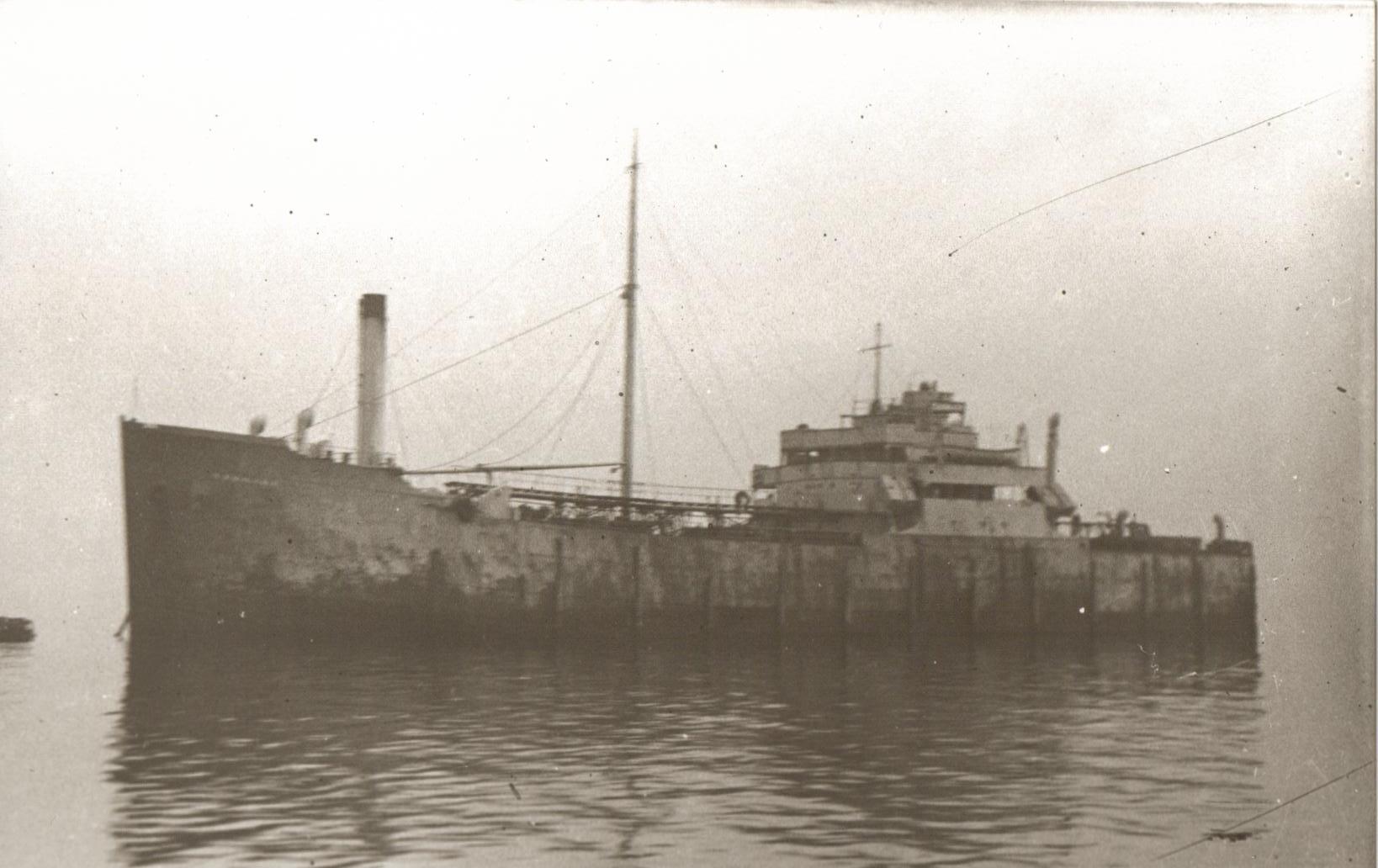
Forepart of Danmark after it was raised