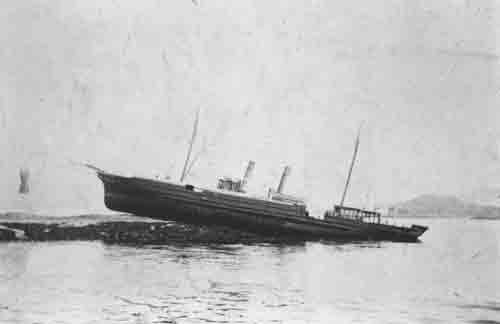
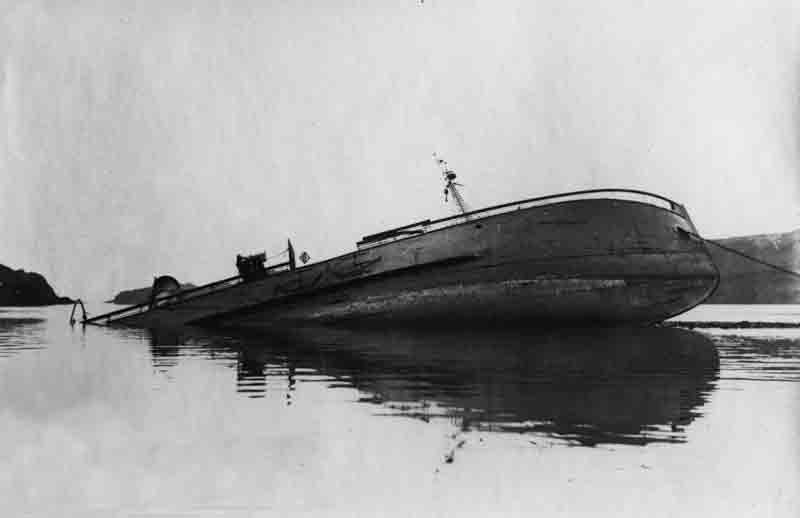
The steel steam trawler Equerry was launched from the Govan yard of Mackie and Thomson Ltd (Yard No 247) on 2nd December 1898. She measured 105.0′ x 21.0′ x 10.7′ and her tonnage was 168 gross tons, 54 net tons. She was powered by a triple expansion steam engine by Muir and Houston Ltd., Glasgow delivering 60 registered horse power. She was built for the Great Northern Steamship Fishing Co Ltd and first registered in Hull H36 on 7th April 1899. Her official number was 110699.

Steam trawler Equerry under way

Lloyd’s register 1915
With outbreak of World War One many fishing vessel were requisitioned by the Admiralty for wartime duties like harbour patrols or minesweeping but many were not, left to continue their fishing duties to provide much needed fresh food for the beleaguered British public. Equerry was one such vessel. On 12th April 1917 Equerry was fishing in the Outer Moray Firth with a large fleet of other vessels when they were approached by the German minelaying U-boat UC-76 under the command of Oberleutnant Wilhelm Barten. Only a month earlier UC-76’s mines had been responsible for sinking the British submarine E-49 off Shetland. The fleet were at the mercy of the German boat and over the next few hours Barten systematically approached each vessel, ordering their crews into the lifeboats, before shelling and sinking each one. On that day he sank eight British trawlers (Equerry, Caliban, Chingkiang, Crown Prince, Fife Ness, Largo Bay, Lilian and Osprey) before submerging and leaving the crews to the mercy of the North Sea weather and tides. Thankfully, all the men from all the vessels survived. Barten and UC-76 were to move off and sink another British trawler, Pitstruan, of off Wick the following day.

UC-76 KTB map showing attack on fishing fleet
The wreck believed to be Equerry has been located and identified in 2012 using a remote operated vehicle (ROV) The wreck is reported sitting upright in position 58° 13.956’N, 01° 13.445’W lying in 105 metres with a least depth clearance of 100 metres.