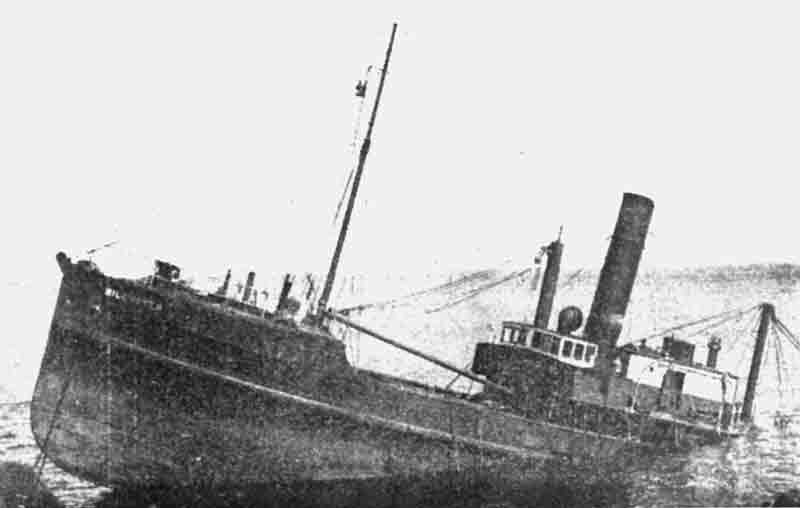
The wooden motor fishing vessel Fruitful Bough was launched from the Peterhead yard of George Forbes and Co Ltd in April 1948. She measured 85.6′ x 20.7′ and her tonnage was 104 gross tons, 56 net tons. She was powered by a diesel engine by Petters Ltd, Staines delivering 420 brake horse power. She was built for Mr Peter Foreman and his two brothers, fishermen from Peterhead, and was registered PD417 before beginning a successful fishing career primarily catching herring off the English North Sea coast working out of Yarmouth. In 1953 she won the prestigious Prunier Trophy, awarded to the vessel with the highest seasonal catch of herring that year. Her official number was 181490.
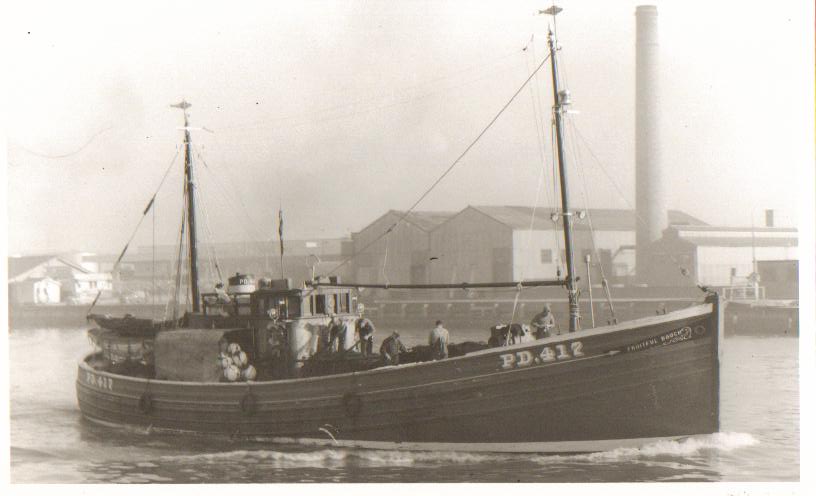
Fruitful Bough under way
At 6pm on 7th December 1961 Fruitful Bough set out from Yarmouth on voyage back to her home port. She was under the command of skipper William Buchan who had a crew of nine men aboard including her mate Alexander Summers, a qualified skipper in his own right. She steamed north with Buchan at the wheel but, between 8 and 9am on the morning of the 8th December her Decca navigation equipment failed leaving the men to navigate the remainder of their voyage using her compass only. Buchan, an experienced skipper, was unconcerned and continued north. By the early evening, they were approaching Aberdeen and just before midnight mate Summers took over the wheel with Buchan retiring to his bunk 15 minutes later. The course was steady at NNW. As they approached Girdleness around 2am the light was obscured but the glow of the lights of Aberdeen was visible off their port side. At this point Summers should have used echo sounder readings to establish their distance from the shore but failed to do so. He continued on the same course although a depth sounding would have told him that a course adjustment to the north was necessary at this point to keep them offshore before their approach to Peterhead harbour. 45 minutes later they were aground still running at full speed.
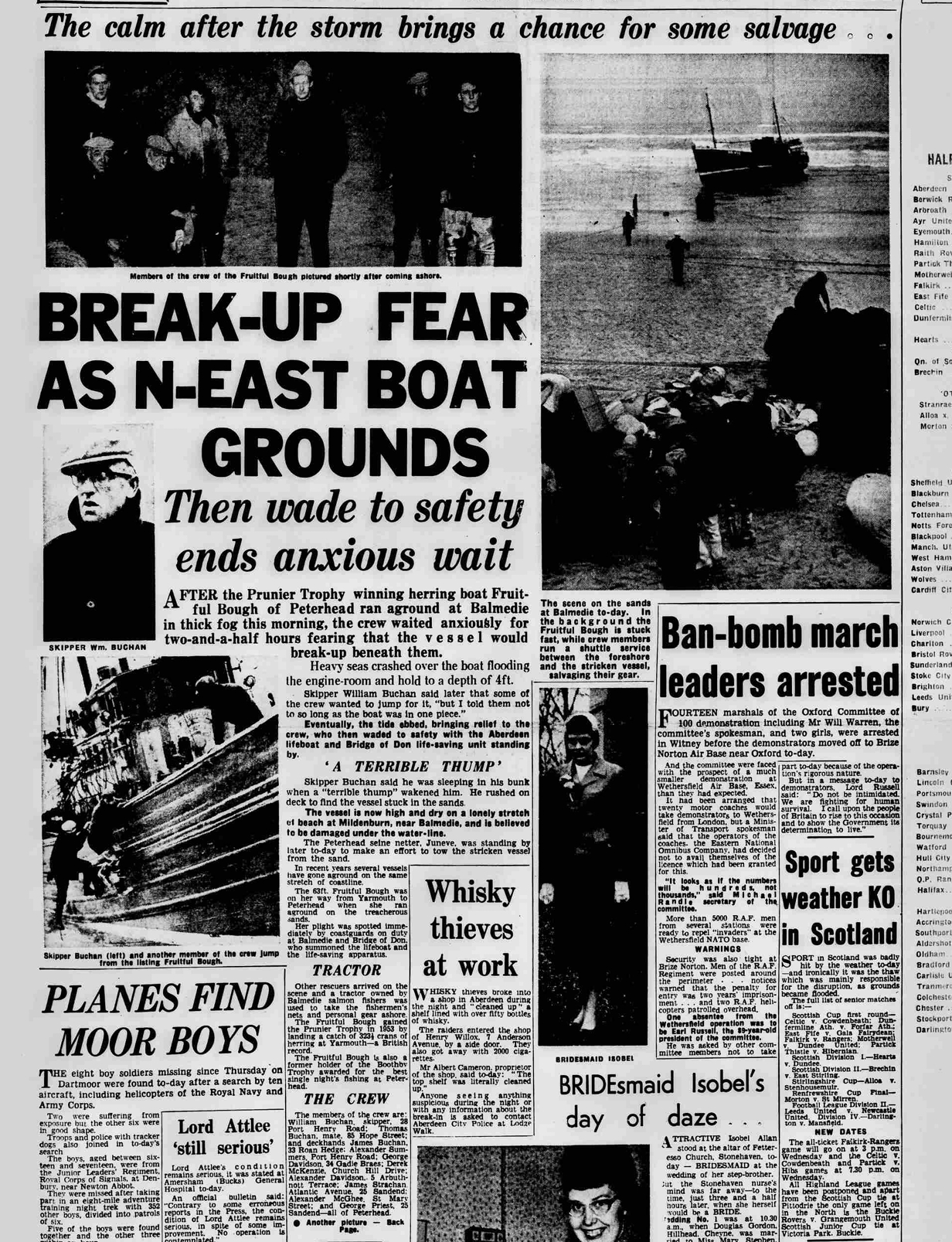
Evening Express 9th December
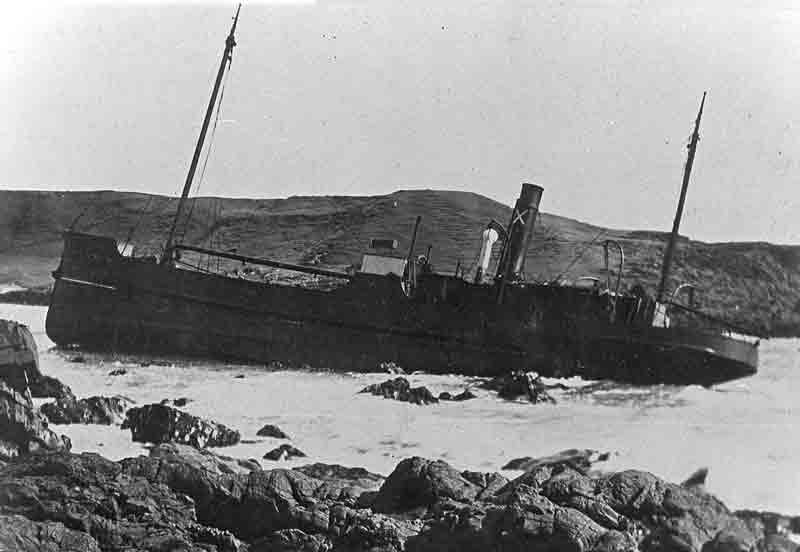
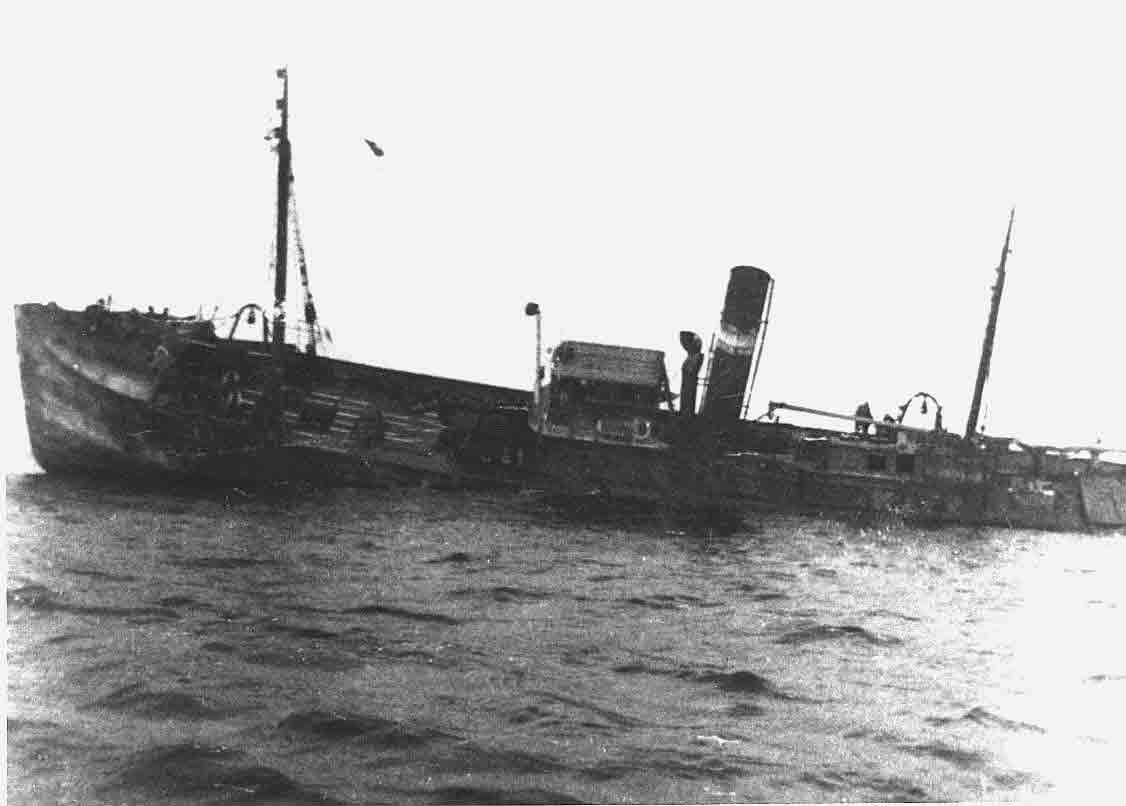
The crew were in no immediate danger as she had come ashore on sandy seabed in relatively calm weather although Fruitful Bough took on a heavy list to starboard and was hard aground. As the weather deteriorated and increasing waves began to beat against her hull the anxious crew had to wait two and a half hours until, with the receding tide, the men were able to scramble ashore with the lifeboat and lifesaving crew standing by in case they were needed. This stretch of shallow shelving sandy beach has been the graveyard of many vessels. Initially it was hoped she might be pulled off but it was not to be. She became a total wreck.
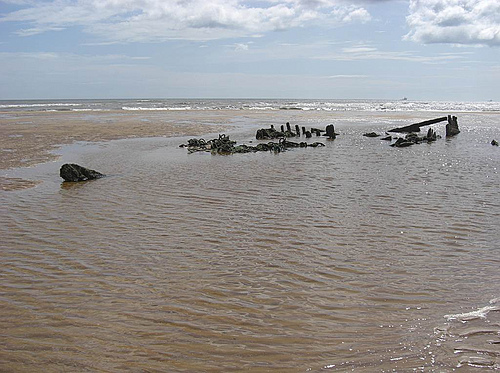
Fruitful Bough wreckage at Balmedie
The rotting wooden remains of the Fruitful Bough are buried in the sands at Mildenburn, Balmedie in approximate position 57° 14.000’N, 02° 02.000’W and are visible at low tide.