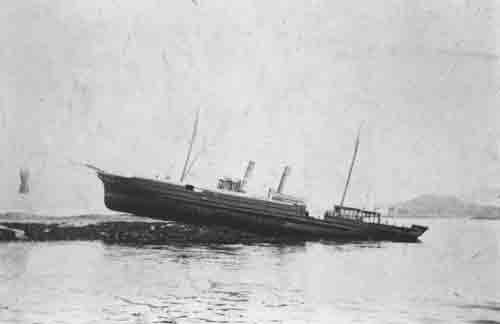
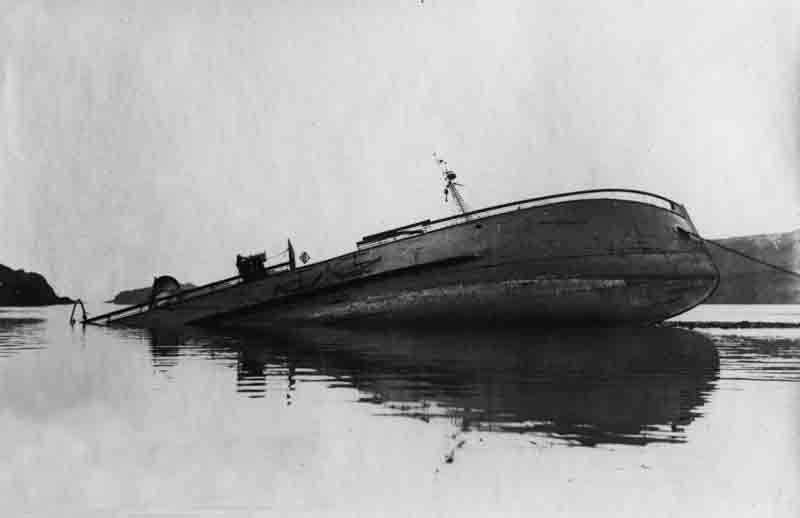
The steel steam trawler Elise I Carnie was launched from the Footdee yard of Hall, Russel and Co Ltd, Aberdeen (Yard no 712) on 30th June 1930. She measured 117.5′ x 22.1′ x 12.2′ and her tonnage was 217 gross tons, 61 net tons. She was powered by a triple expansion steam engine by her builders delivering 77 nominal horse power. She was ordered by Robert Carnie of Granton and registered in this port GN24 later that year. In 1936 she was purchased by George Robb and Sons Ltd of Aberdeen and registered there George Robb A406. With the outbreak of Word War Two she was requisitioned by the Admiralty for war service as a minesweeper in August 1939. The Admiralty later purchased the vessel but she was sold back to her Aberdeen owners in January 1946. In 1959 she was converted to diesel with a new engine fitted in Lowestoft.
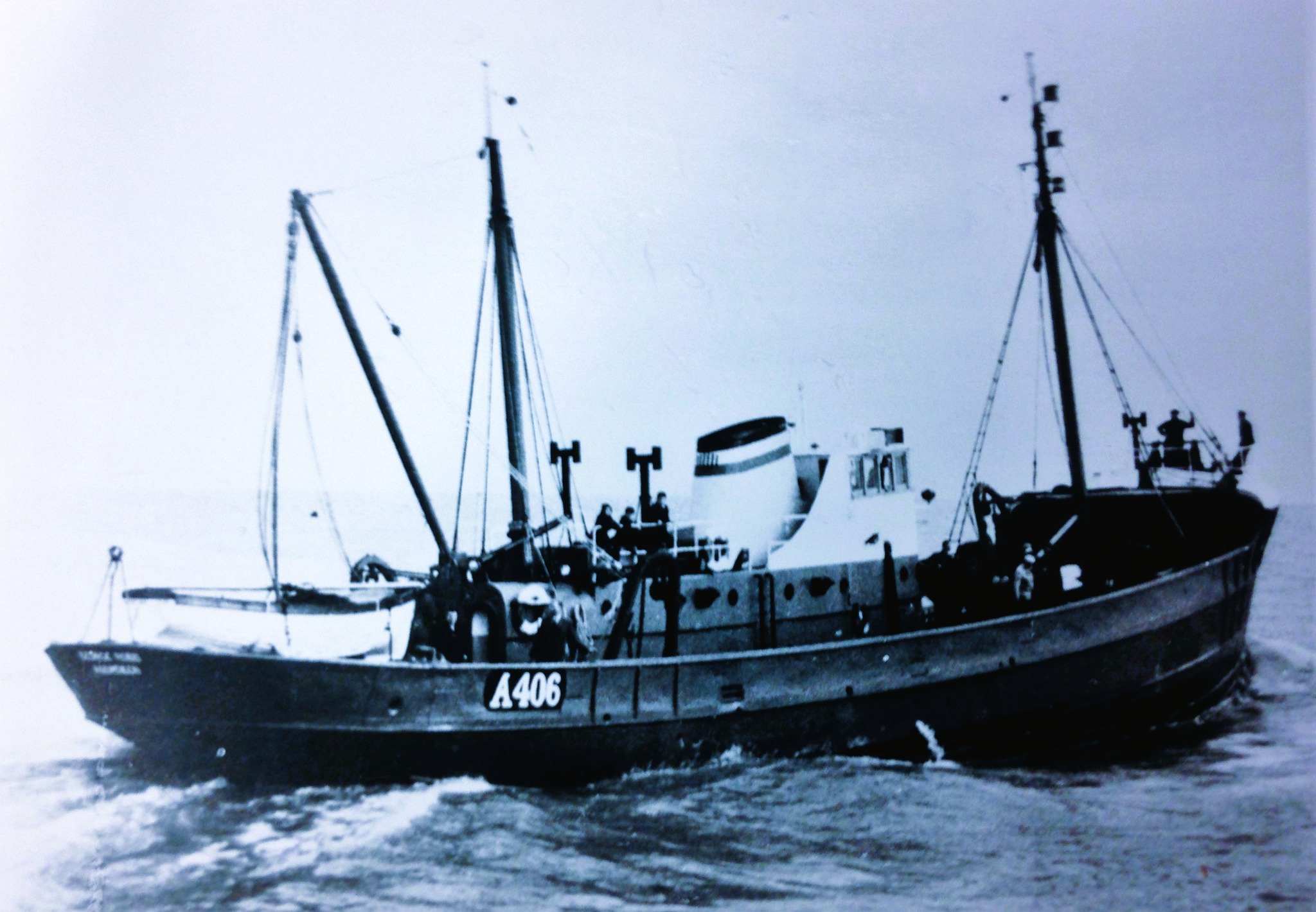
George Robb after conversion to diesel

Lloyd’s register 1950
In January 1959 she stranded in Deer Sound, Orkney but was successfully refloated with little damage. Later the same year she was not to be so lucky. On 6th December 1959 George Robb was caught in a violent gale off Duncansby Head. Aboard her crew of twelve, under the command of skipper Marshall Ryles, could do little to keep their trawler under control and she was driven ashore near Duncansby Stacks under steep 200 feet high cliffs. Her distress calls were picked up but those ashore were also unable to assist given the horrendous weather and huge breakers smashing against the cliffs and the stranded vessel. Later the lighthouse keeper at Duncansby described the weather conditions with waves breaking over the lighthouse itself. The local coastguard arrived at the scene and erected a searchlight. They could see the George Robb on the rocks but nothing could be done to assist the unfortunate crew. The lifeboat Thomas McGunn from Longhope was launched and made the long dangerous trip across the Pentland Firth. It can only be imagined how bad the sea conditions were throughout the voyage. The lifeboat made it across and searched the area around Duncansby Head but visibility was so poor they could not find George Robb and returned to Orkney.
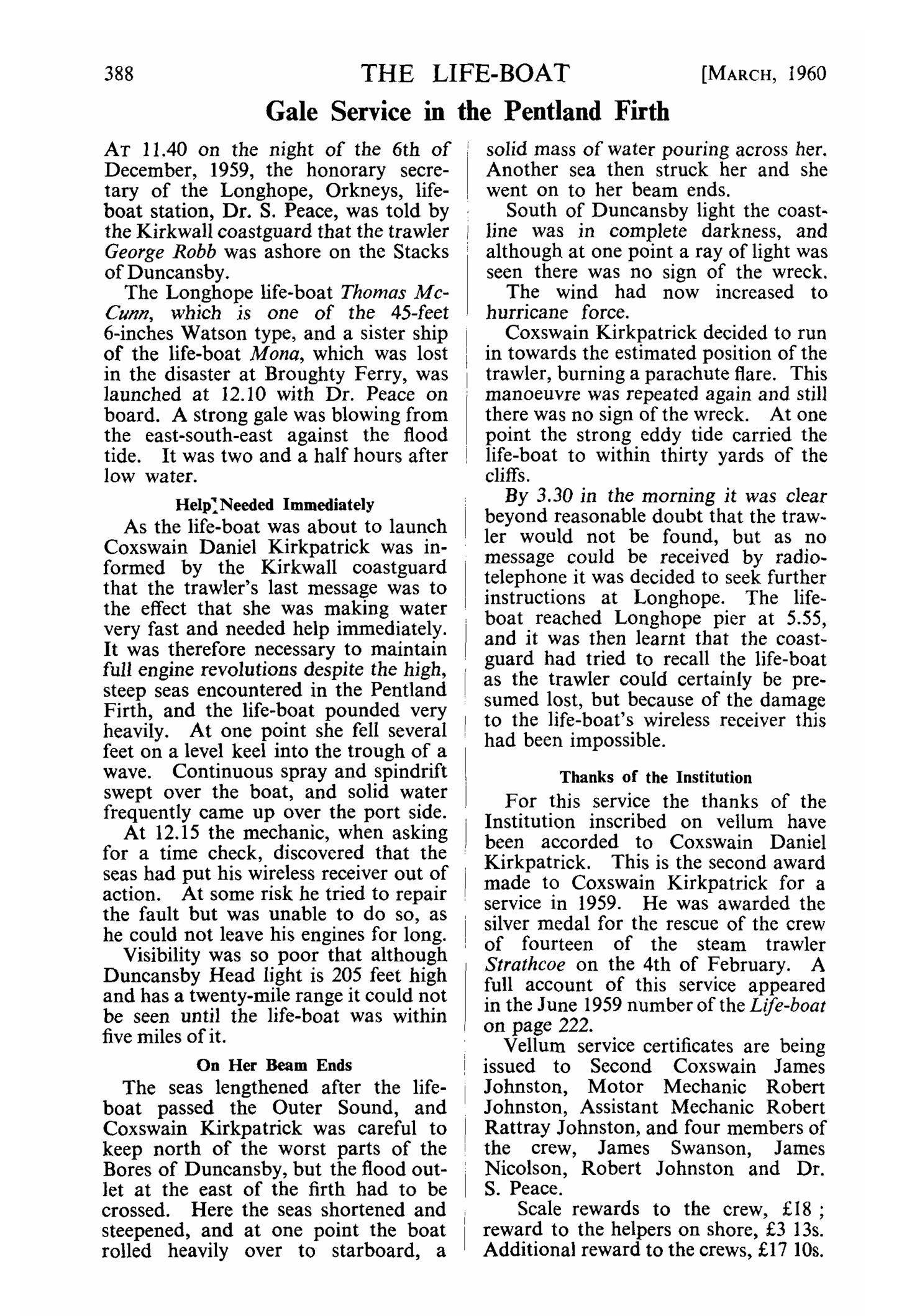
Lifeboat magazine March 1960
The George Robb was smashed to pieces and all twelve crewmen were lost. One of the would be rescuers, Coastguard Station Officer Eric Campbell of Wick collapsed and died as he tried to make his way overland to the wreck site. Six bodies were recovered from the sea over the following days. The wreck of George Robb disappeared within hours of her going aground. We have no information of any salvage that might have taken place or any wreckage that might remain at the site. The exact position of the wreck is unknown but can be estimated as 58° 38.053’N, 03° 01.991’W from the photographs of wreck ashore before she disappeared.
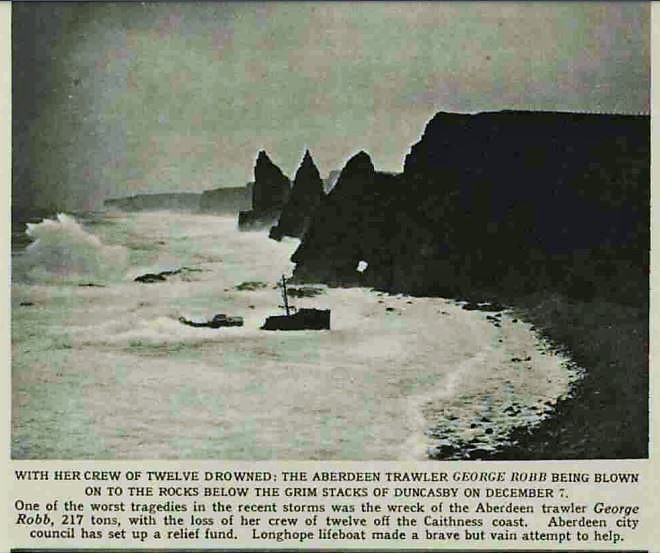
George Robb aground Duncansby stacks