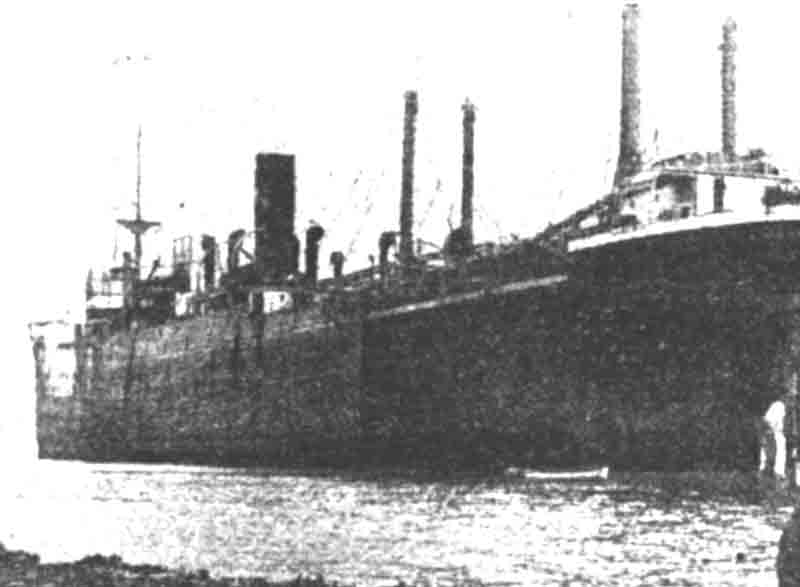
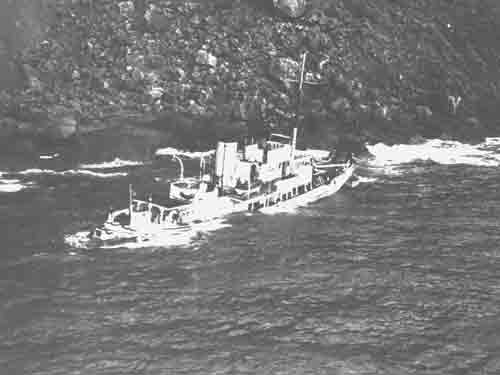
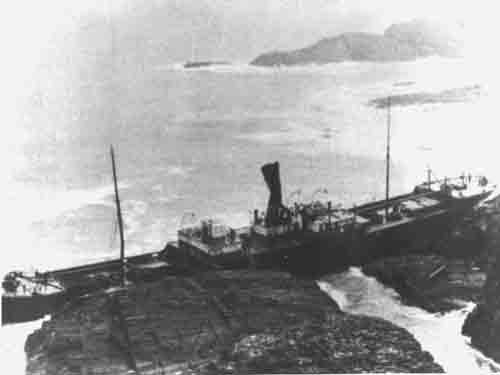
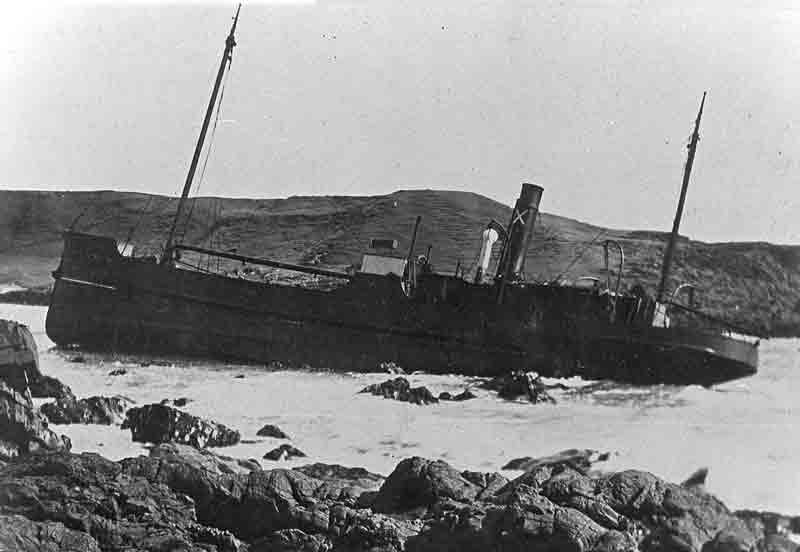
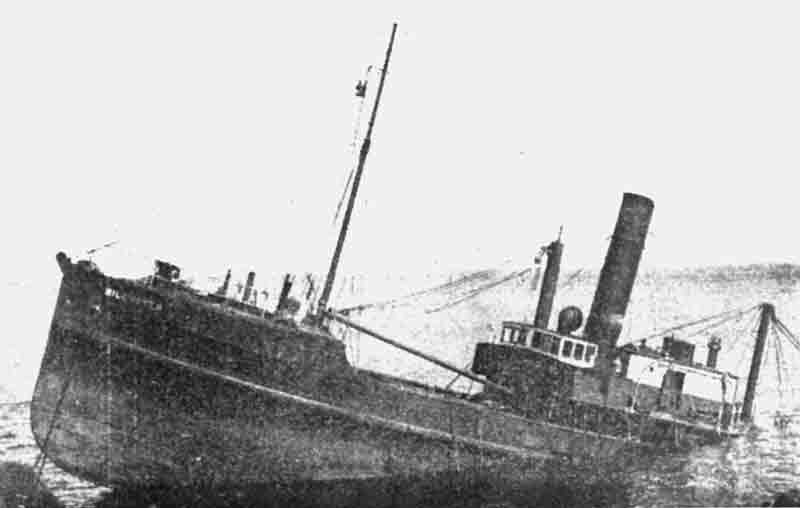
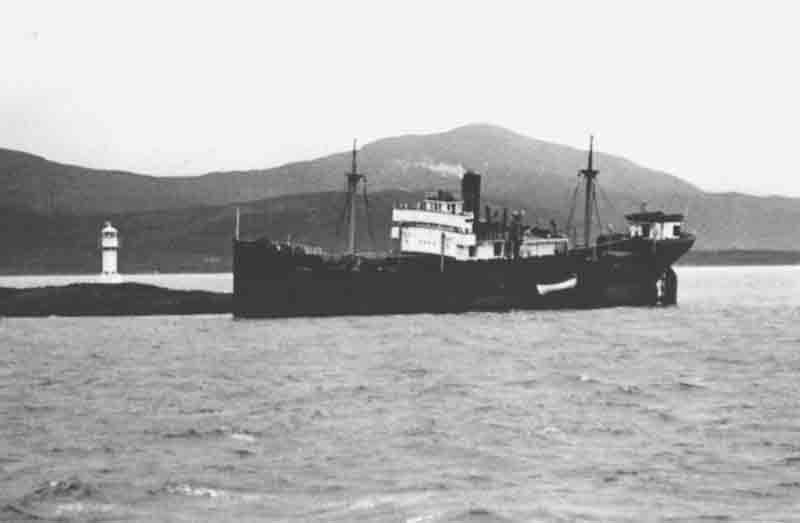
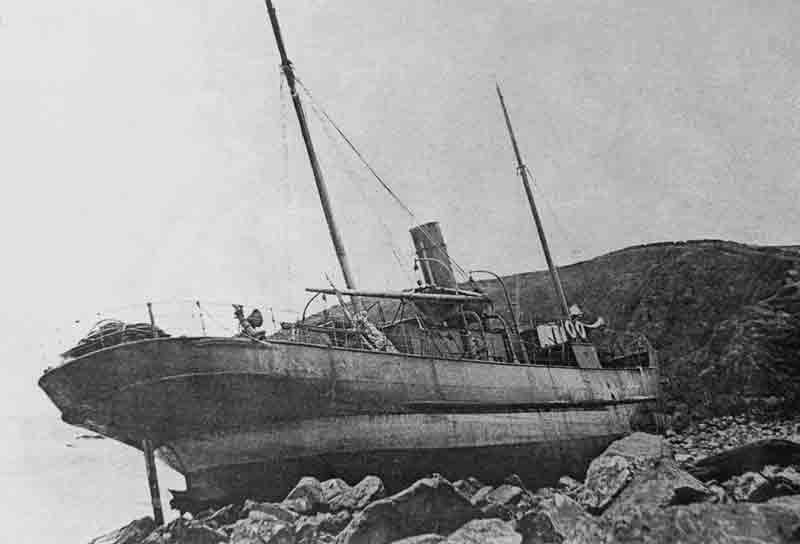
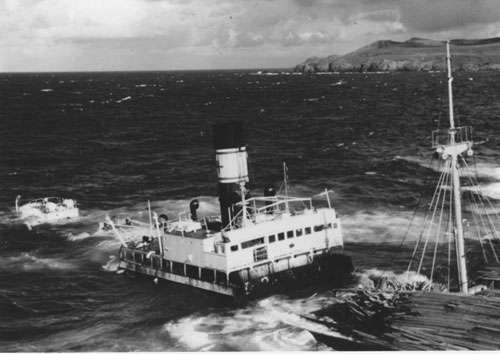
The iron steamship Glenlivet was launched from the Cleveland yard of Backhouse, Dixon & Company (Yard No. 47) in Middlesborough on 23rd March 1870. She measured 120.0′ x 20.1′ x 9.1′ and her tonnage was 155 gross tons, 76 net tons. She was powered by a 2 cylinder compound steam engine from David Joy of Middlesborough delivering 35 nominal horse power. In 1874 her engines were upgraded by David Joy who installed a new engine delivering 42 nominal horse power. Her official number was 58869.
The Glenlivet was built for Cornelius Schmitz of Middlesbrough. In 1874 she was sold on to James Brodie of North Shields who retained her until 1880 when she was purchased by the Eglington Chemical Company of Glasgow, in whose ownership she remained until her loss.

Extract Lloyd’s Register 1891.
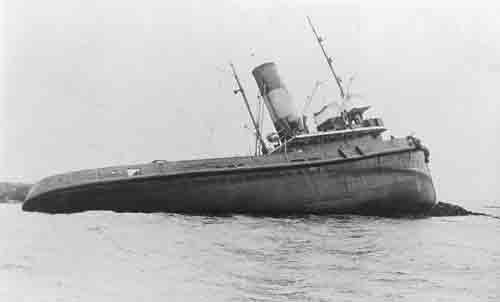
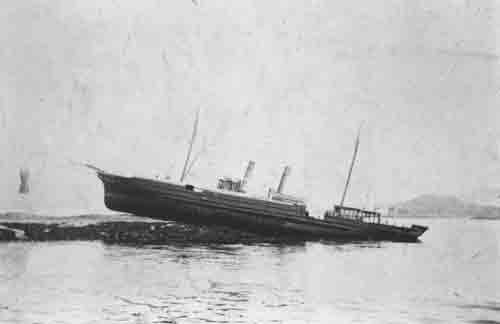
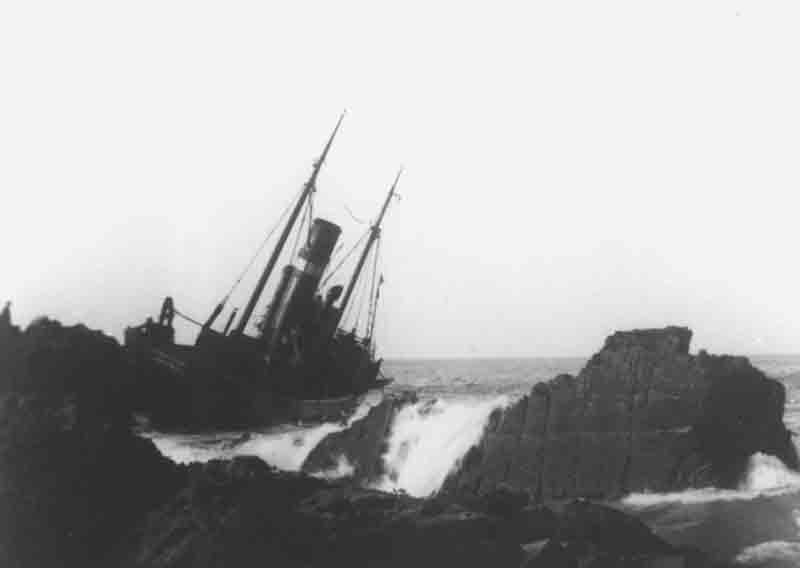
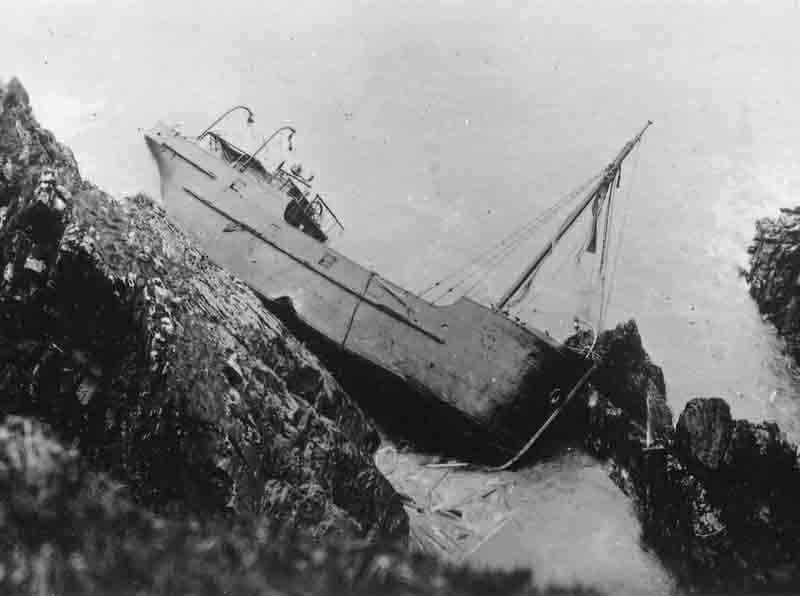
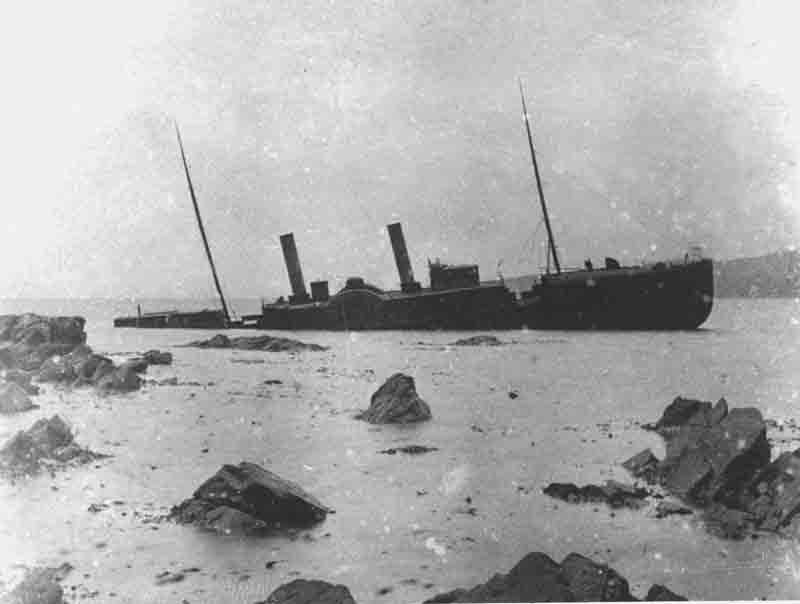
The small coaster had loaded a cargo of 200 tons of alum clay at Glenarm and departed just before midnight on 6th May 1891. She was under the command of her master, John Ritchie who had a crew of seven men aboard. A strong southerly wind was blowing and visibility was poor. Around 3.30am visibility was reduced further when they encountered foggy conditions off Kintyre however, speed was maintained at ‘full ahead’. They continued on their course but, despite visibility remaining poor, no foghorn signals were heard on their route. Around 5.30am the master thought he saw breakers off the port bow and ordered helm hard over the Glenlivet did not react quickly enough and they ran hard aground. An initial attempt to reverse off the rocks failed.

Extract Lloyd’s Annual Casualty Report 1891.
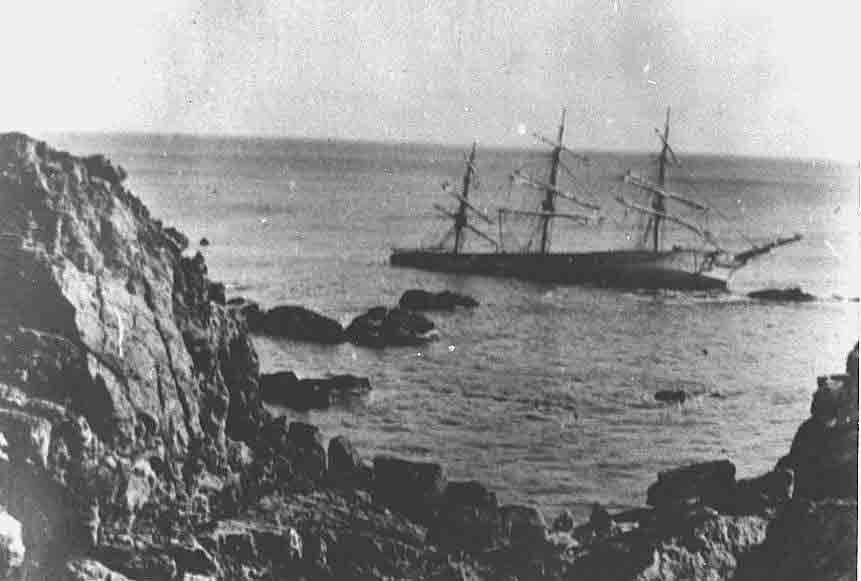
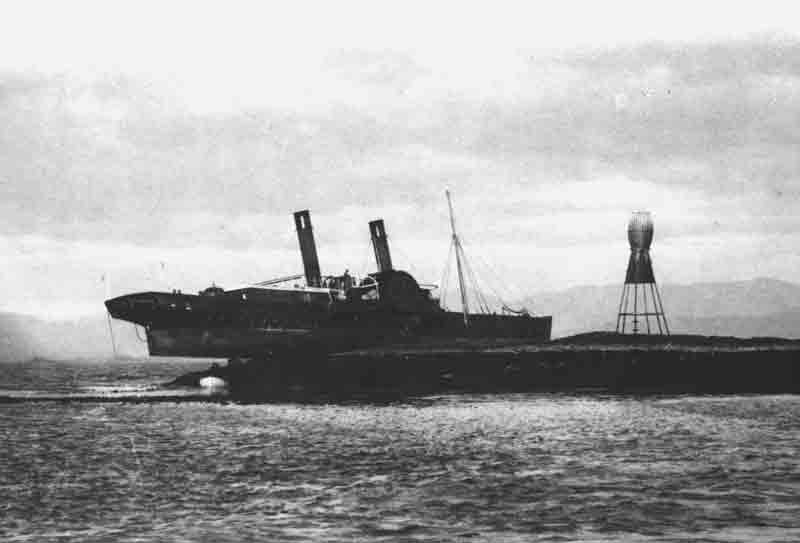
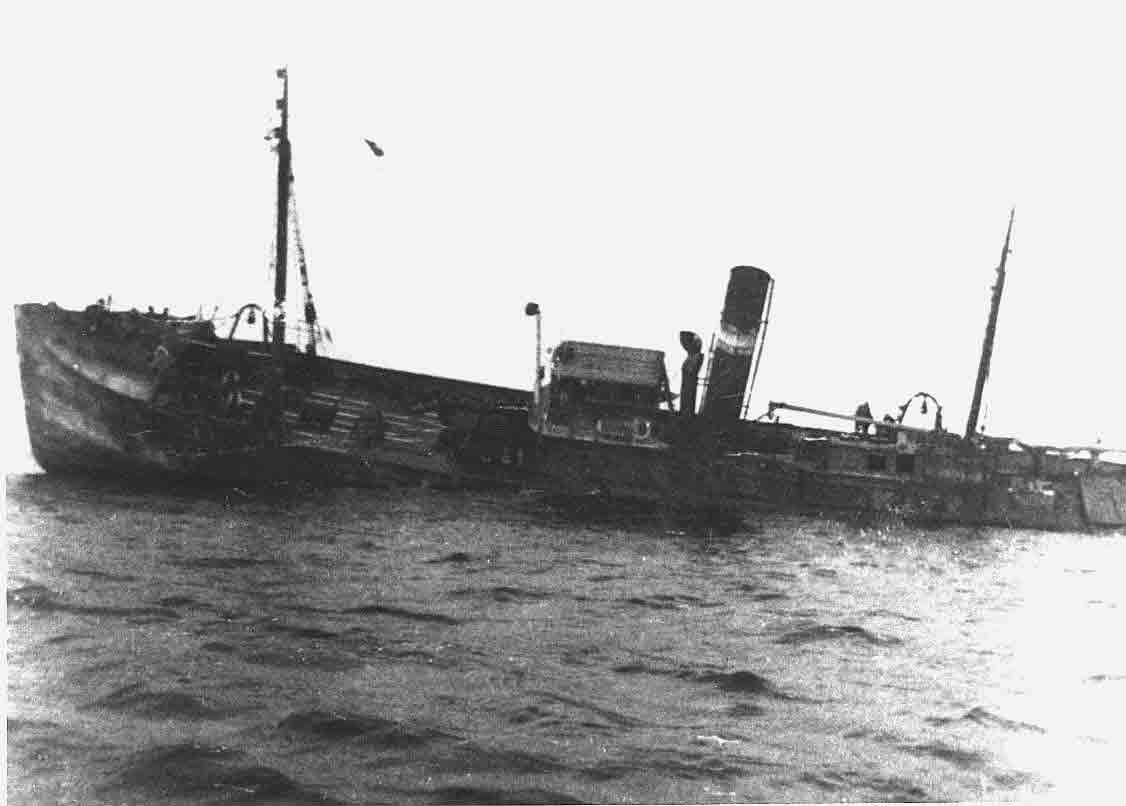
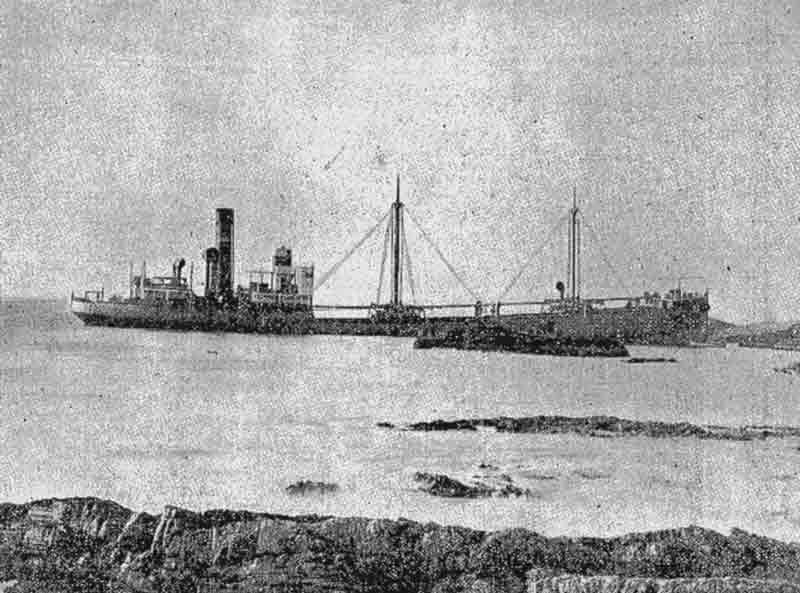
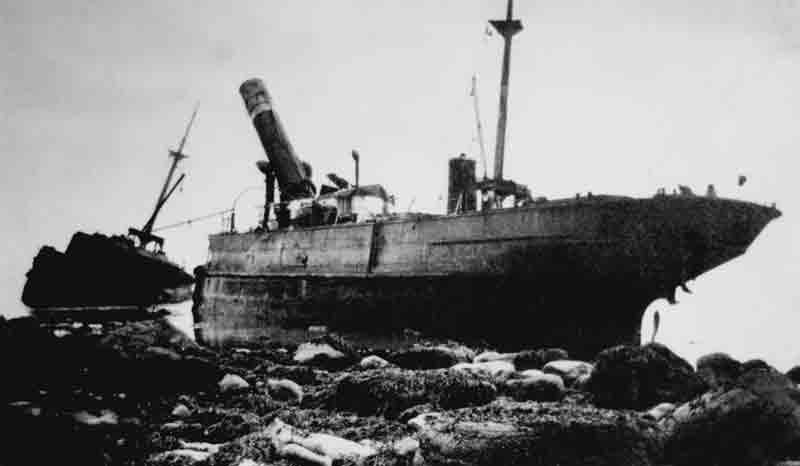
As the weather cleared they could see that they were aground on the south end of Arran about 3 miles west of Pladda, they later found out they were ashore below Shannochie Farm. The Glenlivet was already holed and ballast tanks ruptured. Continued poor weather conditions sealed her fate and after an initial salvage attempt by the Glasgow Salvage Association failed, she was declared a constructive total loss.
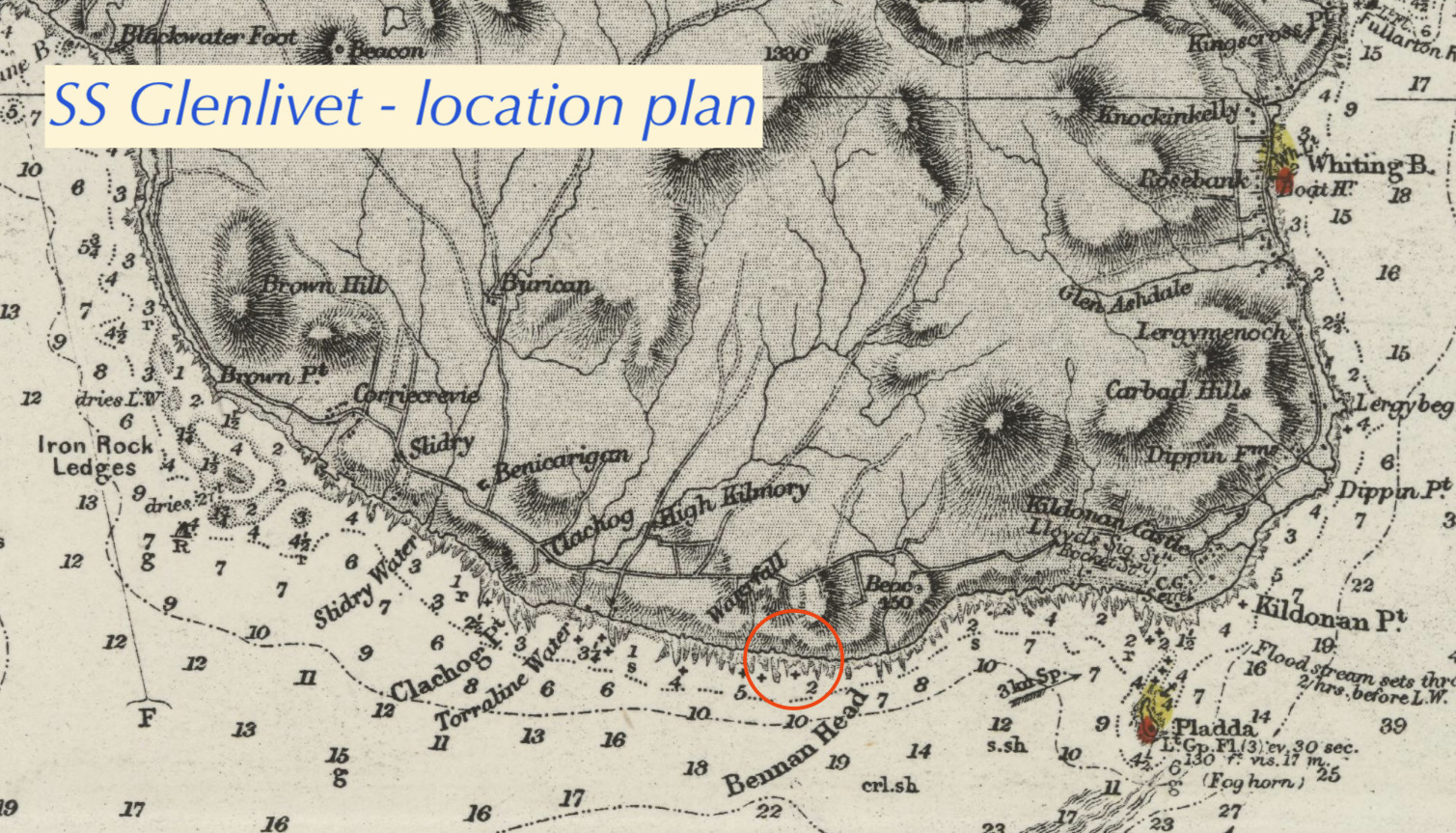
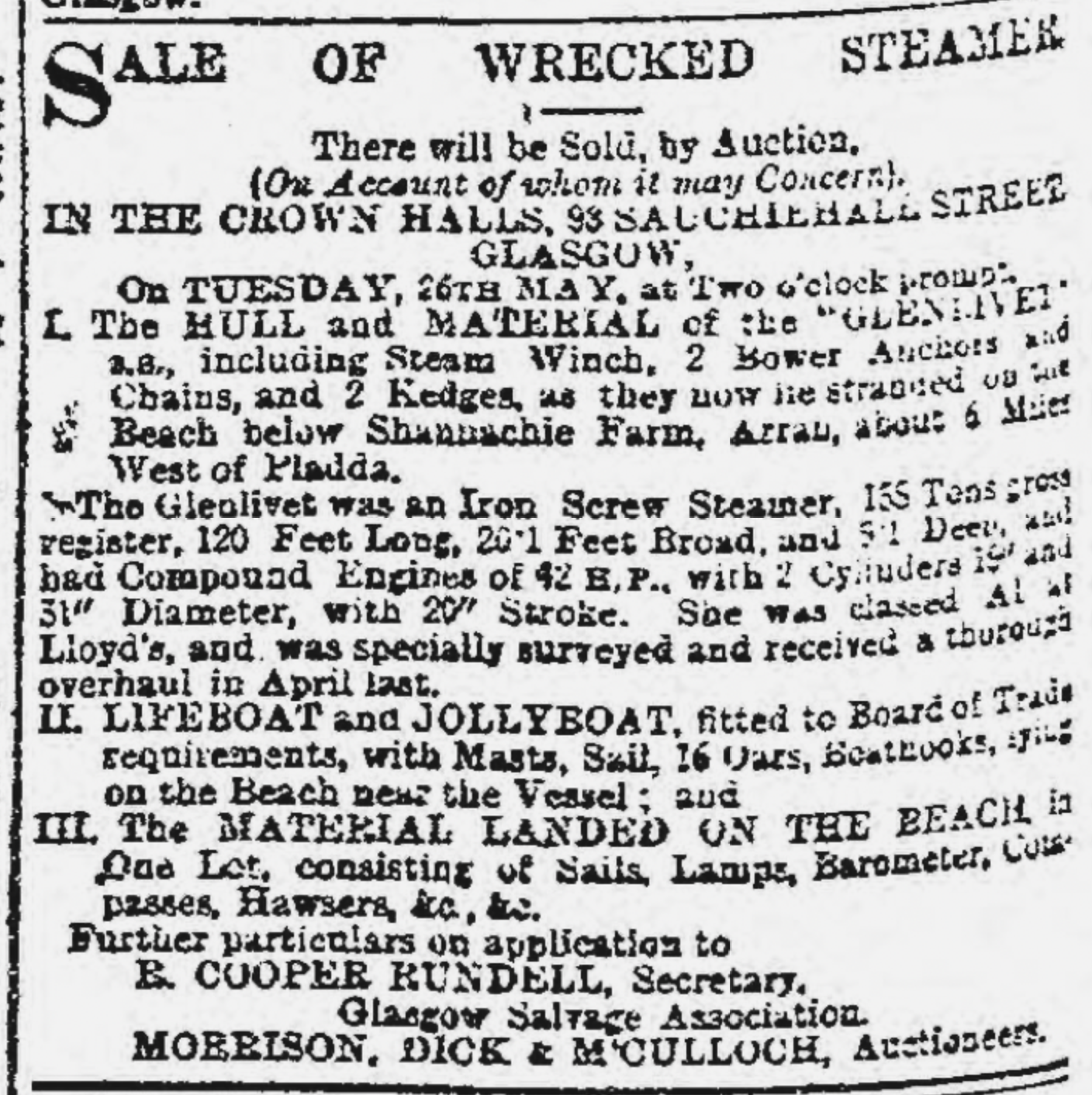
The wreck was advertised for sale at auction on 26th May 1891, in Glasgow. We have not been able to establish who purchased the wreck, nor the success of any salvage attempts, but we do know that her registry was closed during 1891.
A Board of Trade inquiry was held on 28th May 1891 to establish the circumstances leading to the stranding and eventual loss of the Glenlivet. After hearing evidence from the master, senior crew and experts the court found her master to be alone in default, for maintaining his vessel a full speed in the prevailing weather conditions, not establishing his true position and for not taking soundings with a lead line. The court did not take any action with regard to his masters certificate.
We would like to thank Lloyd’s Register Foundation – Heritage & Education Centre for allowing us to reproduce documents from their archive in this article.