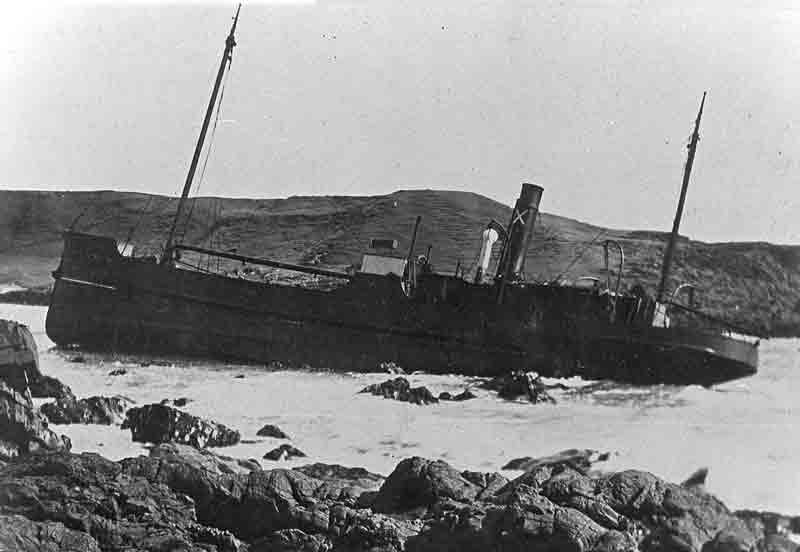
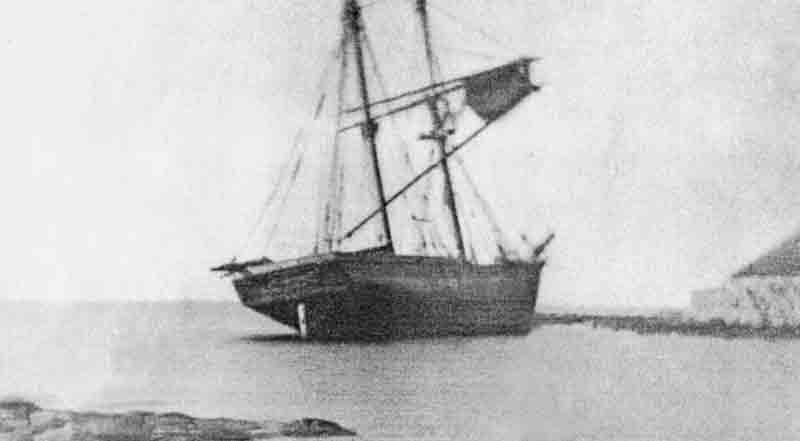
The wooden auxiliary 3 masted schooner Havet was launched from the Kolding yard of V Kragh in 1920. She measured 129.8′ x 29.9′ x 13.0′ and her tonnage was 331 gross tons, 254 net tons. She was fitted with an auxiliary 2 cylinder diesel engine by J and C G Bolinders delivering 148 horse power. Built for Mr C Orum of Copenhagen she was acquired in 1938 by Mr M Pederson of Sejero (Denmark) who changed her name to Willemoes . In subsequent years he changed the name once more to Karen.
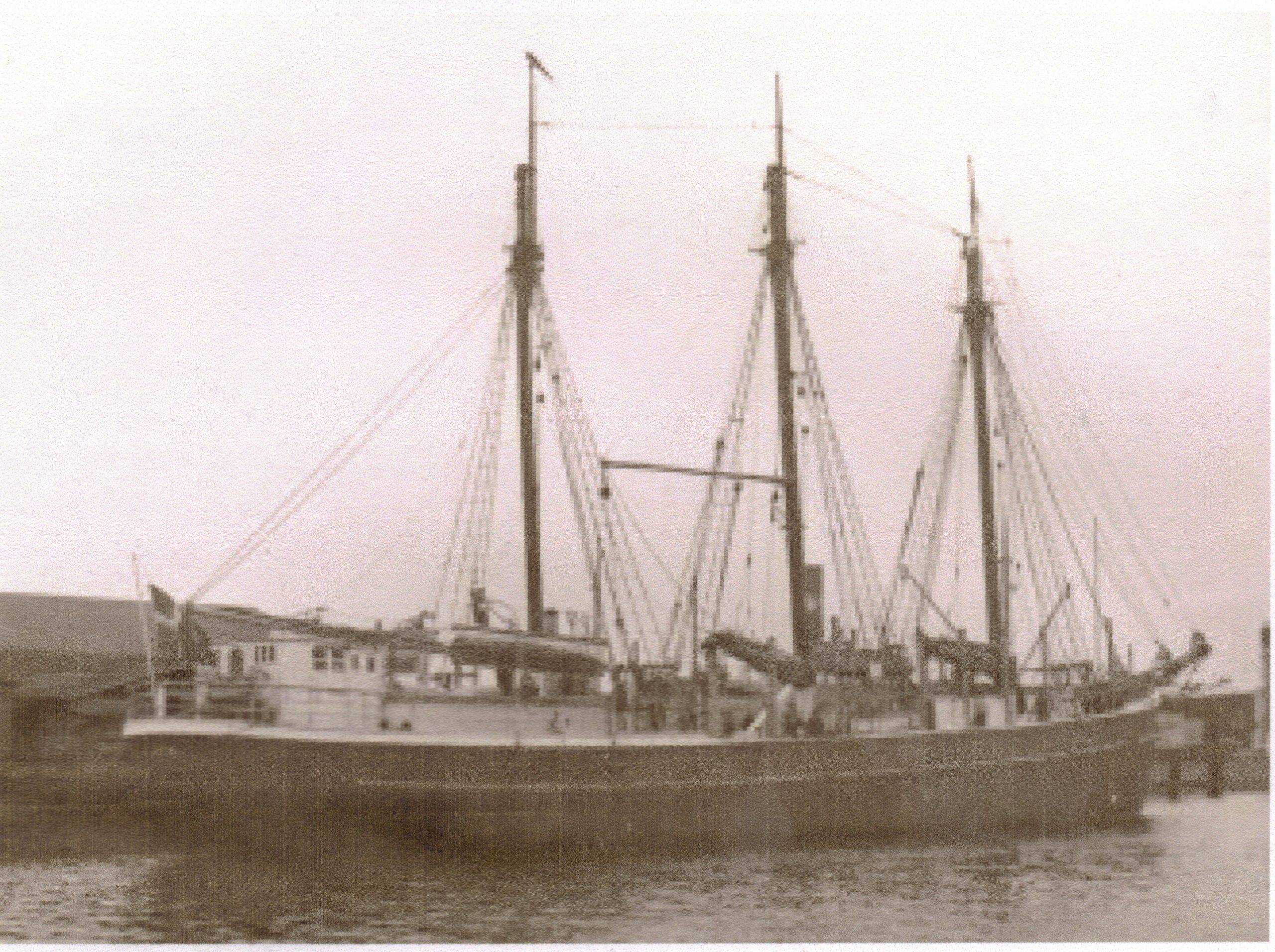
Auxiliary schooner Karen alongside

Lloyd’s register 1939
On 5th February 1940 Karen was laid up at anchor during a voyage from the Tees to Copenhagen in a position in Largo Bay off Methil, Fife. Aboard the nine crewmen were struggling with their vessel in strong winds which was dragging her anchor towards the shore line. Trouble with her auxiliary engine left it ineffective in moving her off shore to safety. The crew fired distress signals and, thankfully, the signals were observed ashore and by a local steam drifter which raced to the scene and safely lifted off the full crew. They were landed at Methil and taken to the local Seaman’s Mission where they quickly recovered from their ordeal. The Karen too survived the night. Apparently the anchor finally held and she avoided being swept ashore.
Later that day the crew returned to their ship and began preparations to get her seaworthy and ready to continue her voyage. Suddenly around 8pm the ship was rocked by a huge explosion and immediately caught fire. The flames spread quickly and soon she was engulfed in flames from stern to bow. It later transpired that the crew had attempted to start the engine which backfired and instantly exploded. Two unfortunate members of the crew, the engineer Karl Hensen and the young greaser Sven Hensen, were trapped in the blazing engine room and, despite the efforts of the remainder of the crew to reach them, perished in the blaze. The remaining crew safely escaped the burning ship in the ship’s boat and were picked up by a passing steam drifter and taken ashore to Methil. A huge crowd ashore watched the ship burn to the waterline. In 1950 the wreck, which lies close to the entrance to Methil, was wire swept to remove any hazard to local shipping
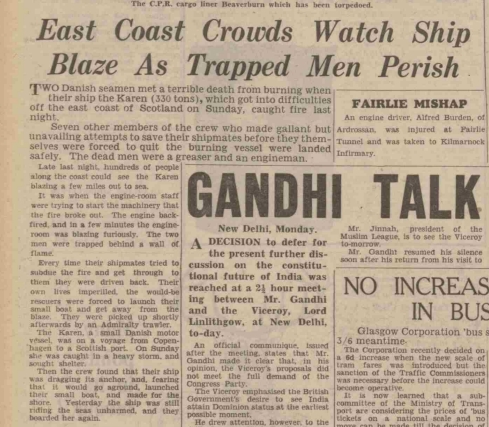
Daily Record 6th February
The Hydrographic chart for the area positions the remains of the vessel at 56° 11.061’N, 02° 58.837’W lying in 6 metres. As the vessel was predominantly wooden and subsequently wire swept it is unlikely that anything substantial remains although perhaps some metallic remnant might still exist.