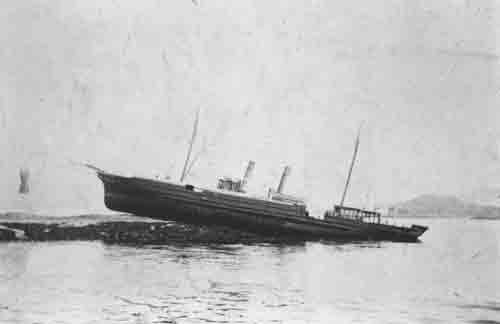
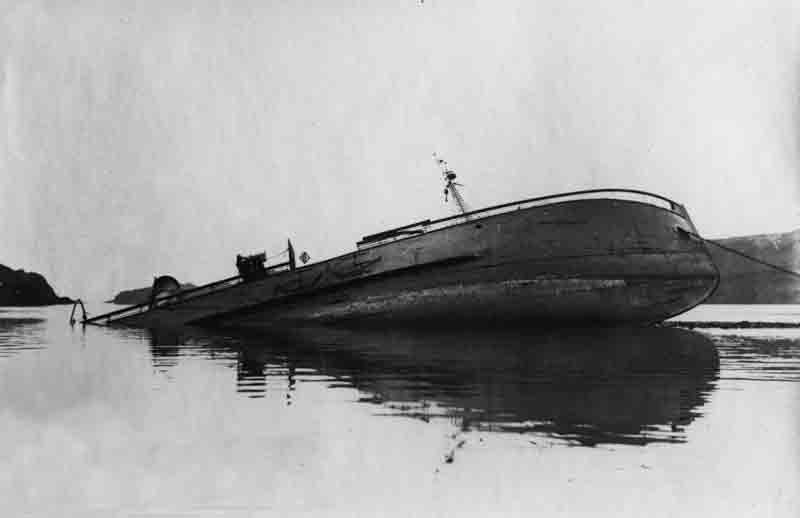
The iron steamship Nar was launched from the Bowling yard of Scott and Co Ltd., Bowling (Yard No 52) on 29th March 1884. She measured 145.0′ x 22.3′ x 10.5′ and her tonnage was 291 gross tons, 99 net tons. She was powered by a two cylinder compound steam engine delivering 55 registered horse power. Built for the Nar Steamship Co Ltd (C E Wise) of Kings Lynn she was first registered on 12th May 1884. In 1894 she was purchased by John Hay and Sons of Glasgow. Further ownership changes followed before she was acquired by her final owners, George Webster and Co Ltd., Glasgow in April 1903. Unfortunately her career for this owner was to be a brief one.

Lloyd’s Register 1904
On 13th December 1904 she was en route from Sunderland to Burghead with a cargo of coal. She was under the command of Captain Lewis Hughes who had a crew of eight men aboard. She encountered a severe north east gale forcing Captain Hughes to anchor close to the shore off Speymouth. However, this position offered little respite from the direction of the storm. It appears that at some point her anchor line parted and she came ashore or foundered. The first indication ashore of the vessel’s predicament was when, in the early hours of the dark morning, the coastguards at Garmouth spotted blazing torches and then a single distress flare out to sea but, with the terrible weather, the rocket brigade, who rushed to the scene, were unable to render any assistance to the anchored vessel. In the morning wreckage, including a lifebuoy marked ‘Nar Glasgow’ came ashore confirming the fate of the vessel and her crew of nine men.
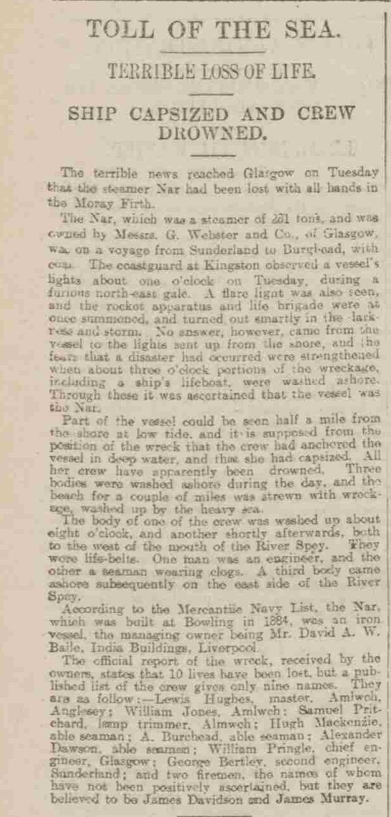
Manchester Courier 17th December
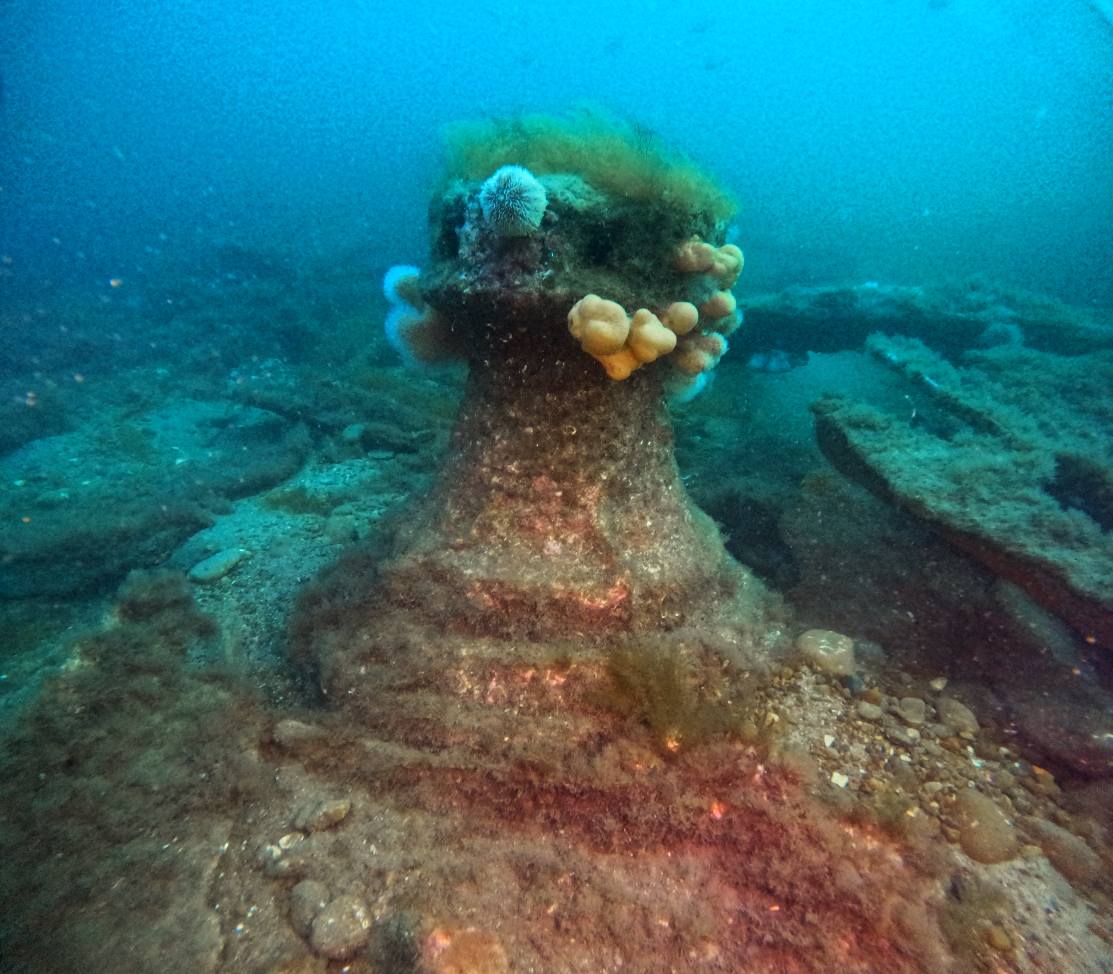
The shallow wreck of the Nar is a popular site for local dive clubs. She lies in position 57° 41.789’N, 03° 08.001’W in 14 metres mainly rising only 2 metres above the seabed. It would appear from the remains of the wreck that she was subject to substantial salvage in the years after her stranding. The site is subject to strong tidal flows at times and best dived at slack water. It is also close to the mouth of the River Spey reducing visibility dramatically after heavy rainfall. The wreck is well broken but the large boiler is still visible rising around 4 metres above the otherwise scattered wreckage. Forward of the boiler the bow is still visible also rising above the generally flattened wreck.