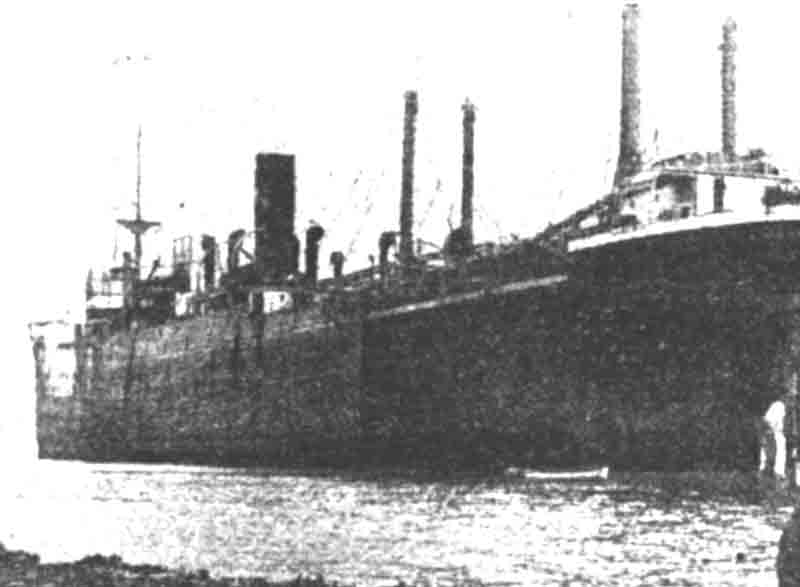
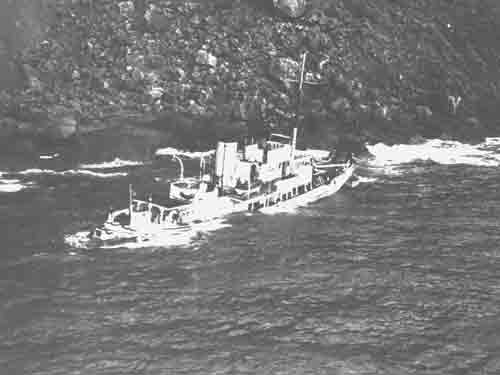
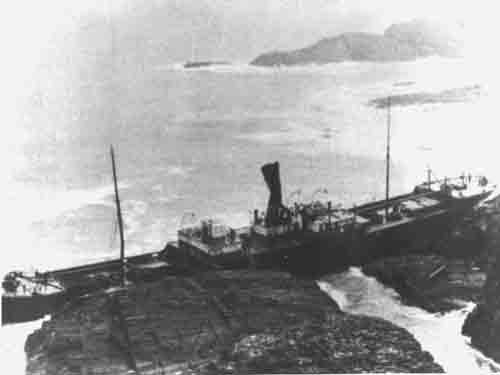
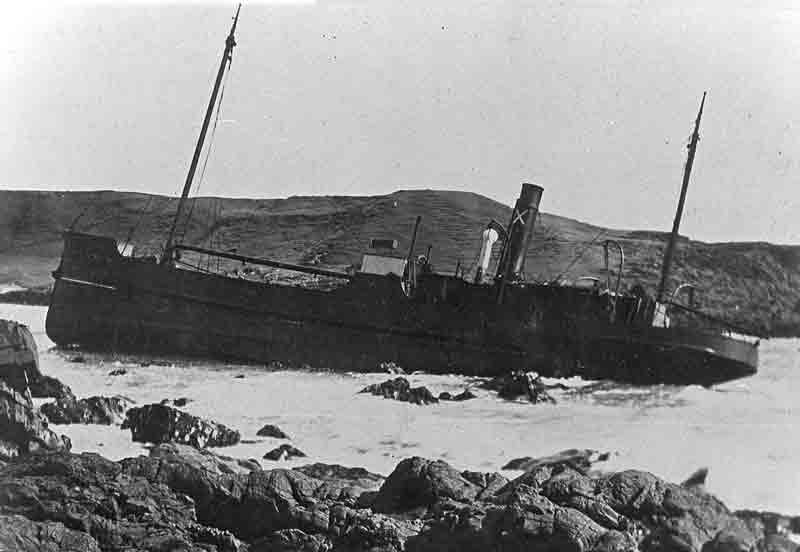
The iron steamship Romeo was launched from the yard of Earle’s Shipbuilding and Eng’g Co. Ltd., Hull (Yard No 234) om 3rd February 1881. She measured 275.0′ x 34.6′ x 19.9′ and her tonnage was 1730 gross tons, 982 net tons. She was powered by a compound steam engine by Earle’s delivering 333 nominal horse power. Ordered by T Wilson and Sons Ltd., Hull she had accommodation for thirty nine first class passengers and twenty two second class passengers. In 1917 the Wilson Line became the Ellerman Wilson Line Ltd. Her official number was 82494.
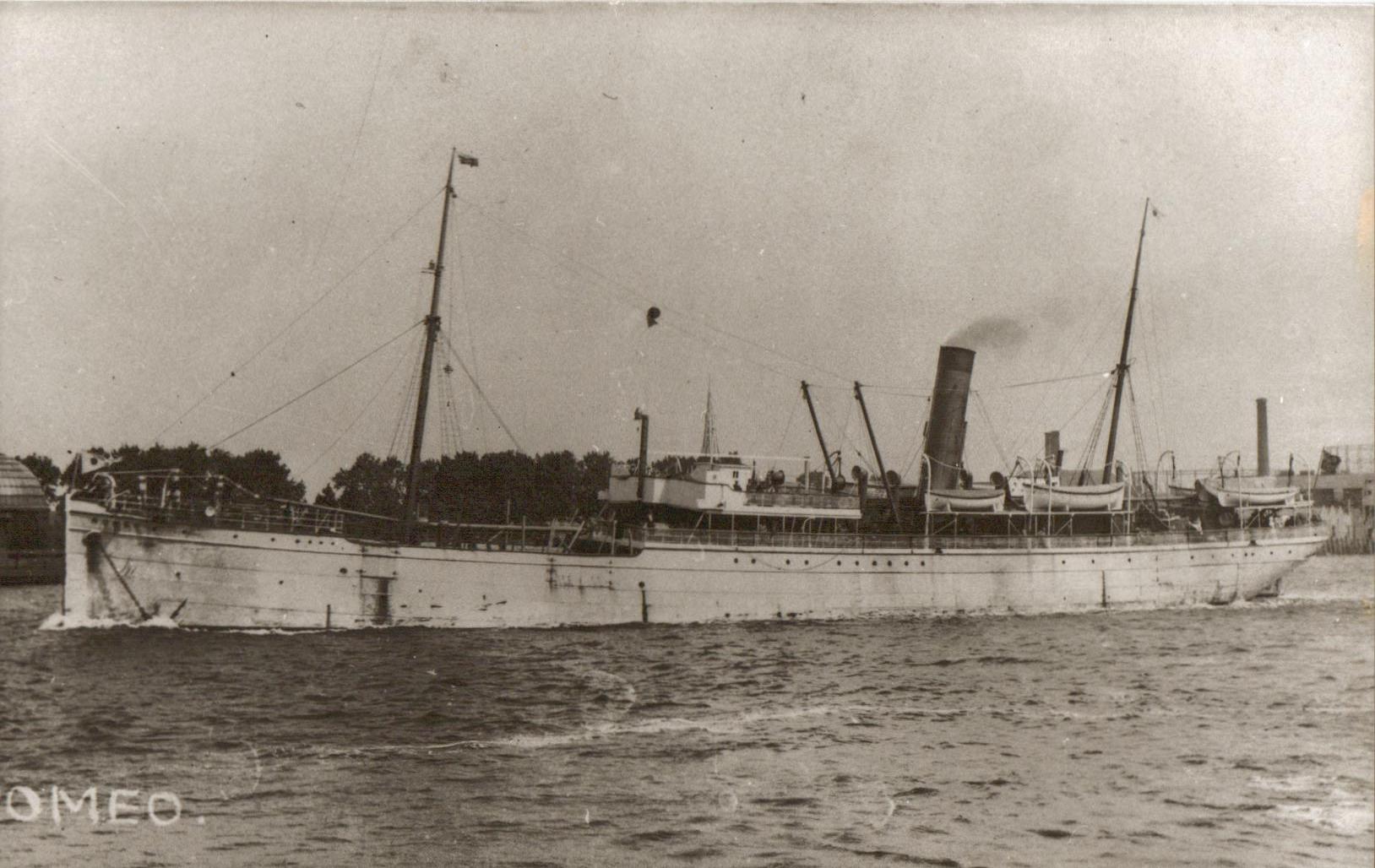
SS Romeo under way

Lloyd’s register 1915
On 23rd February 1918 Romeo departed from Scapa Flow under the command of her captain T Niele with a crew of 28 men aboard including two gun crew. Returning from an Admiralty charter delivering provisions to the British fleet she was bound for Liverpool in ballast. She called at Stornoway, remaining there for six days, before heading south again. On 3rd March 1918 at 2.40 a.m. she was south of the Mull of Galloway, steaming a zig-zag course at 10 knots hoping this manoeuvre would keep her safe from enemy U-boats known to be operating in the North Channel. The weather was good with an occasional snow shower, a light wind and a smooth sea. The first officer was in charge on the bridge and had placed a lookout on the forecastle head, another on the bridge and one on the gun platform aft. All lights on the ship were carefully screened and no navigation lights were burning. Suddenly a green and red light appeared off her port bow. Fearful of a collision with another ship, the order was given to show the Romeo’s bow navigation lights. This was to be a fatal mistake as the lights seen were a ruse from the German submarine U-102 (Kapitanleutnant Kurt Beitzen) designed to trick the Romeo’s crew into giving away their exact position. Almost immediately a torpedo slammed into Romeo’s port side between the stokehold and the engine room. The explosion split the ship in two, first listing to port, then righting herself before sinking in less than two minutes. There was no time to launch the lifeboats and the crew were thrown into the water. The two men of the gun crew managed to cling to a swamped boat and eventually bailed it out. Shortly afterwards they spotted a sailor in the water and hauled him out into the boat but, unfortunately, he died before they could be rescued. At daylight the two gunners managed to get the mast and sail up and were picked up by the steamship Ardgarvel at 11.00 a.m. and later landed at Greenock. The only other survivor was the wireless operator, Arthur Sneddon. He was picked up by a trawler and landed at Holyhead by the patrol boat Kilgobnet at 11.00 a.m. on 4th March.
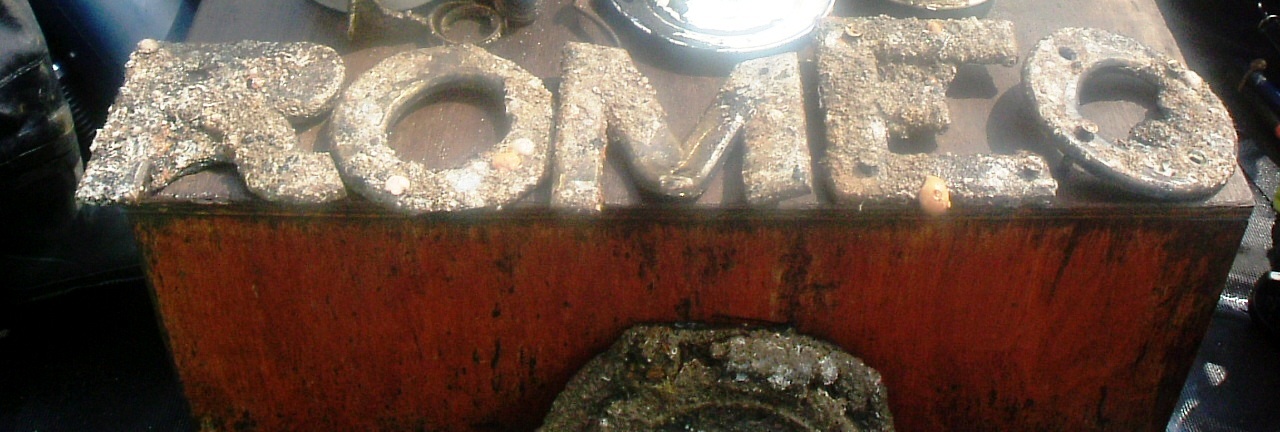
Name letters recovered from wreck
The wreck of the Romeo lies in position 54° 22.351’N, 004° 52.062’W (WGS84). Her identity was confirmed in the late 1990s the ship’s bell was recovered from the wreck. The wreck, which is in two major pieces and oriented 090/270 degrees, lies in a
general depth of 48 metres and rises about 8 metres from the seabed. The wreck is 150 metres in length and 20 metres wide with the split aft of the boilers. The bow section lies on its port side and is broken up. The muddy seabed stirs easily so visibility is often limited especially on spring tides.