The iron steam trawler Shakespeare was launched from the Hull yard of Cook, Welton and Gemmell (Yard No 207) on 23rd April 1898. She measured 109.9′ x 21.0′ x 11.2′ and her tonnage was 182 gross tons, 60 net tons. She was powered by a triple expansion steam engine by Tindall and Co Ltd., Hull delivering 55 nominal horse power. Built for the National Steam Trawling Co Ltd., of Hull she was first registered in this port H406 on 21st July 1898. Her official number was 109041.

Shakespeare (H406) under way

Lloyd’s register 1907
At 5am on 3rd December Shakespeare set out from Hull for the fishing grounds around Orkney under the command of skipper Arthur Patch who had a crew of nine mean aboard. They fished successfully in the seas around Sule Skerry before Patch set course for the homeward journey around 7:15pm on 10th December. The subsequent inquiry focussed heavily on the care Patch had taken to establish the vessel’s position during fishing operations. Patch maintained he had regularly checked his bearings to Sule Skerry and Noup Head although the subsequent accident raised serious questions if enough care had been taken to do so. At 2am on the 11th Patch took a final set of bearings and set course south by west for Dunnet Head. He was later to admit that less care had been taken to cross reference these two bearings at this stage than had been exercised previously. Patch then took the wheel and, with him alone on the bridge, maintained the course and full speed until 5:50am when the third hand arrived on the bridge. Around this time a light was spotted to their south south east which, although not precisely where it should have been, they determined was the light on Dunnet Head. The skipper then handed the wheel to the third hand while he went below briefly. By this time, the damage had been done. When land appeared through the darkness off their port bow the skipper determined it was Hoy and maintained course. Shortly after land appeared on their starboard side shortly before they ran aground. The Shakespeare was more than 20 miles from the position Patch had believed he should be.
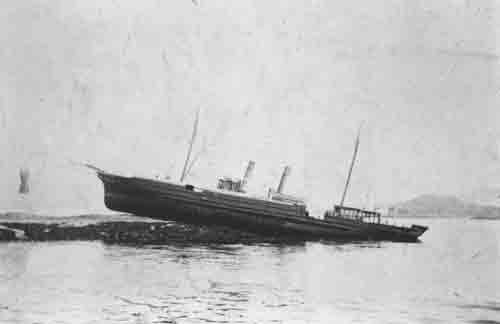
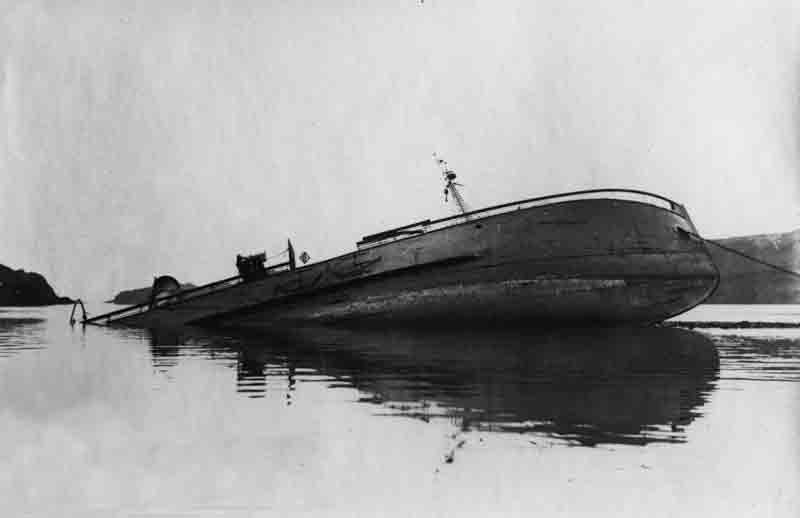
After she struck Shakespeare’s stern swept round towards the shore and she listed heavily to starboard. The order to put the engines full speed astern was apparently given at or immediately after the vessel struck and they continued going astern for 5 or 6 seconds when the skipper stopped them. He then started the whistle winch was blown for about five minutes. At this time the wind was not a very strong but there was a good deal of surf which at once commenced to wash over the vessel. Efforts were then directed to getting the boat out but, after it had been got over the side, it was capsized by the heavy seas breaking over the ship and eventually disappeared under the stern out of the hands of the crew. Shortly after a huge wave broke over the Shakespeare washing two of the crew overboard. They were never seen again. The remainder of the crew took to the ship’s masts but, as the ship continued to be lashed by wave after wave, the cook and the trimmer lost their grip and they too vanished overboard and were lost. The rocket brigade arrived around 9am and managed to bring two of the remaining crew members ashore. The Stromness lifeboat also reached the scene and took off the last three members of the crew.

Shakespeare aground near Braga Skerry
The subsequent inquiry held that Patch had acted with great carelessness both in failing to take proper measurements before he departed from the fishing grounds and by failing to verify Shakespeare’s position when lights were spotted. They did accept that the light at Dunnet Head was not dissimilar to the light on Graemsay which was in fact the light they had spotted. However, even after this point, had Patch taken a depth sounding it would have quickly demonstrated that they were far closer to land than the skipper believed.

Position of wreck
Shakespeare became a total wreck quickly breaking up in the exposed position she had stranded. We have no information on any subsequent salvage or indeed of there are any remains of the vessel where she went down. The position of the wreck was described at the time as one cable north of Braga Skerry, Breckness. Based on this information we have assigned a position of 58° 57.903’N, 03° 21.538’W.